
Ambient Stress in the Workplace: The Invisible Force Behind Burnout, Fatigue, and Turnover
You finish work and feel drained, but when you think about your day, nothing clearly explains it.
The day wasn’t overwhelming. You handled your responsibilities, responded when needed, and moved through your tasks without anything standing out as unusually stressful.
Still, the fatigue lingers.
It shows up as a quiet tension in your body and a slight mental restlessness that doesn’t fully switch off. You’re not reacting to anything specific, but it feels like your system has been “on” the entire time.
This is common in environments where pressure is always present, even if it isn’t obvious. In healthcare settings, for example, a shift can go by without a major event, but the awareness that something could happen never really leaves. That ongoing awareness becomes part of the experience.
Over time, these small, continuous signals act as an ambient stressor. They don’t demand attention on their own, but they stay in the background and gradually build into what we call AMBIENT STRESS.
You don’t always notice it while it’s happening. You mostly feel it afterward, when the day is over but the tension hasn’t fully gone with it.
What Is Ambient Stress?
Not familiar with ambient stress? Don’t worry, I’ve got you.
The word “ambient” comes from the Latin for “to surround,” which perfectly captures the feeling of being surrounded by pain and trauma from around the world.
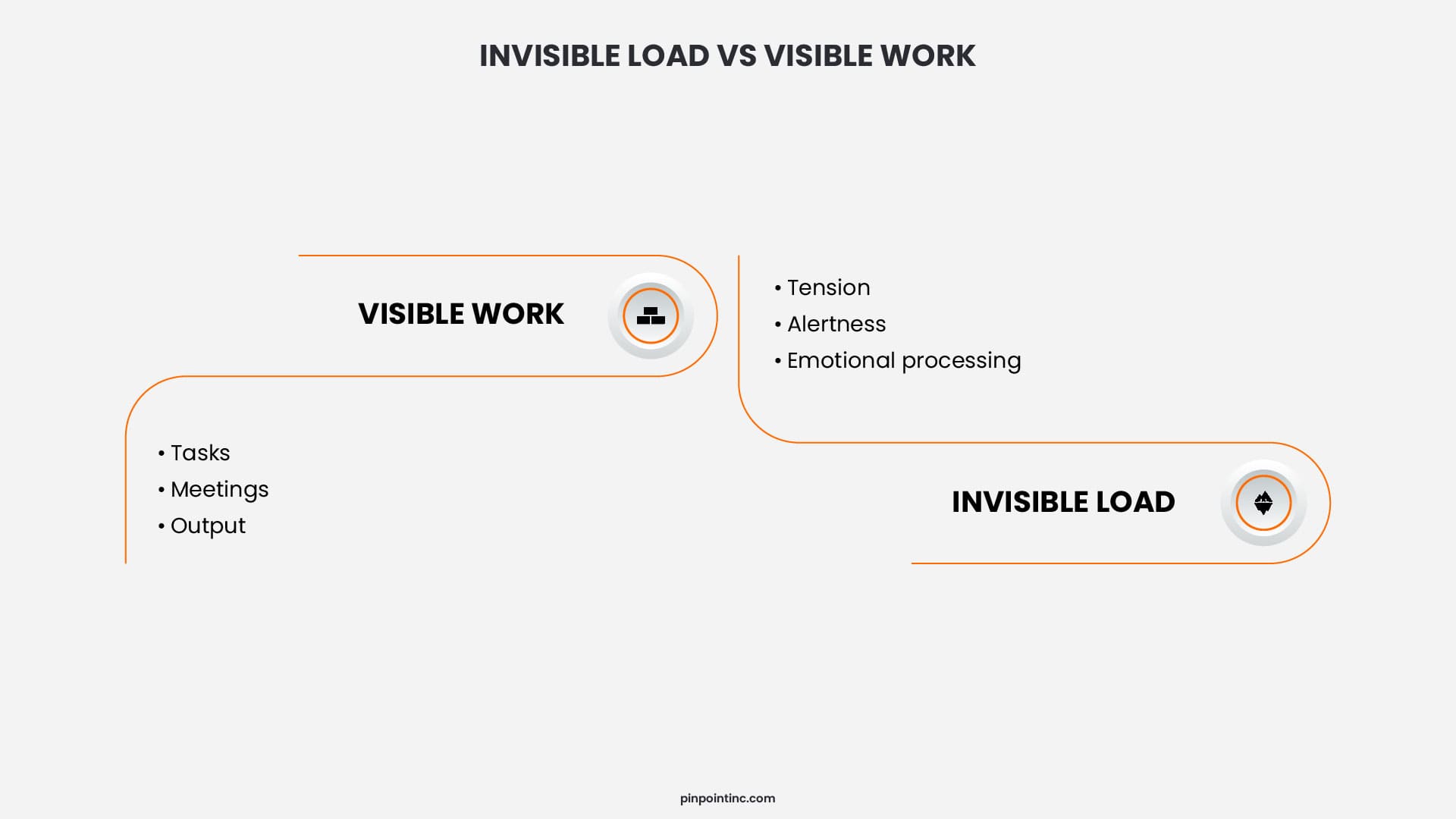
It happens when you are exposed to ongoing, low-level pressure throughout the day. It can come from things like a tense work environment, frequent interruptions, constant alerts, or simply being in a setting where you need to stay mentally alert. Each of these acts as an ambient stressor. On their own, they don’t feel overwhelming, but because they keep happening, they add up and create ambient stress.
The reason many people don’t notice it is because it doesn’t stop you from doing your job. You continue working as usual, but your mind and body are under continuous load, by the end of the day, that buildup shows up as fatigue, even when nothing major seemed to happen.
How Ambient Stress Builds in Everyday Work Environments
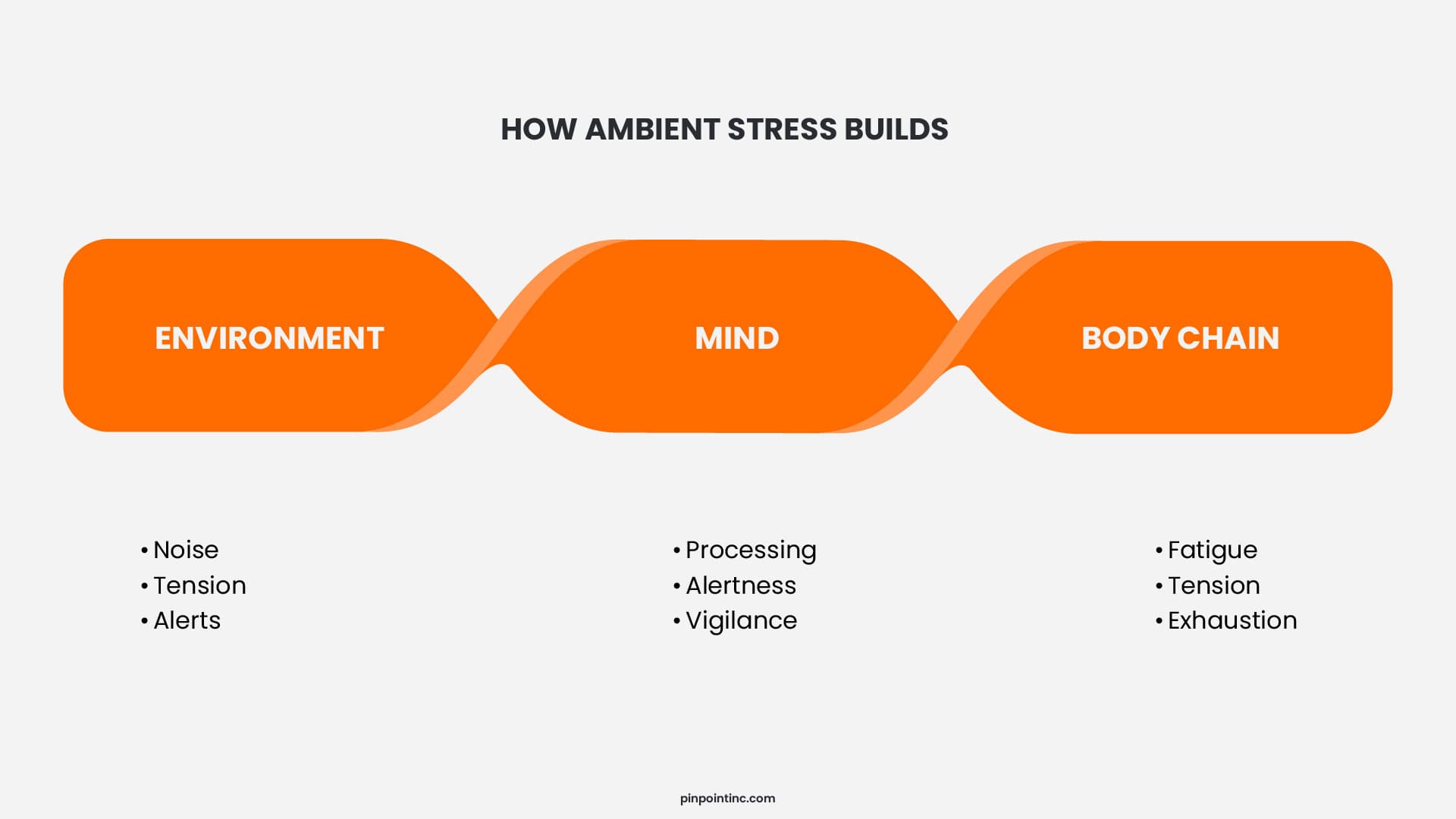
This one builds through repeated exposure to small, ongoing pressures in your environment. These signals may seem minor individually, but when they occur continuously without resolution, they create a steady mental load that gradually leads to fatigue. Few of the examples were:
Constant Exposure
- Background tension in the environment
- Ongoing alerts, noise, or interruptions
- Awareness that something could escalate
Repetition Without a Break
- Interruptions keep coming
- Conversations stay tense
- You move from one task to another without a reset
Lack of Resolution
- You stay alert, even after a situation passes
- There’s no real “closure” to the tension
- The environment stays unpredictable
Limited Control
- You adapt instead of disengaging
- You stay responsive instead of switching off
- You adjust to the pressure rather than reducing it
What the Data Tells Us About Everyday Workplace Stress
Nearly 46% of healthcare workers report feeling burned out often or very often, and about 44% have considered leaving their roles.
At the same time, nearly 65% of nurses report high levels of stress and burnout.
If you look at a typical workday, you’re constantly processing input. It could be interruptions, a tense atmosphere, ongoing alerts, or simply the need to stay ready for what might happen next.
Each of these acts as an ambient stressor. Individually, they’re manageable. But when they keep repeating without a proper break, your system stays engaged longer than it should. That’s how ambient stress develops, and why the fatigue feels disproportionate to the day you had.
Ambient Stress vs Ambient Trauma: What’s the Difference?
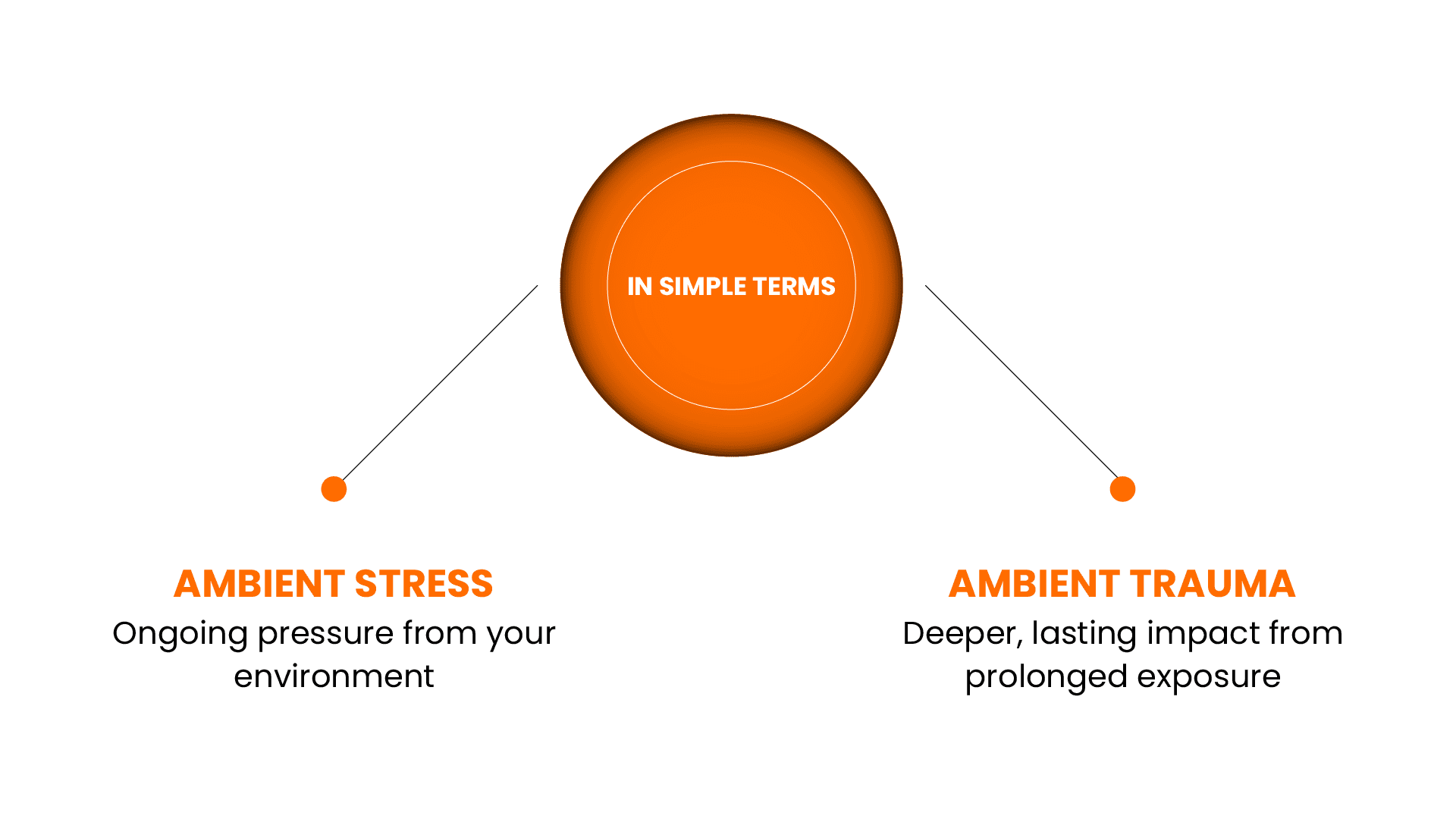
Now we have the most important question, which is what’s the difference between ambient trauma and ambient stress? Since we’ve already covered ambient stress, let’s understand what is ambient trauma, as people often confuse these two.
Ambient trauma is what develops when someone is exposed to ongoing stress in their environment for a long time without proper recovery. It’s not caused by a single event. Instead, it builds gradually through repeated exposure to pressure, tension, or emotionally demanding situations until it starts affecting how a person feels even outside of those moments.
To explain this further, here’s what that looks like in real-world scenarios:
- You get home, but your mind is still replaying parts of the day instead of settling down
- Situations that once felt manageable start to feel heavier or more draining than usual
- You notice yourself reacting a bit faster or feeling more on edge in everyday interactions
- The fatigue doesn’t stay at work, it follows you into your personal time
- Even after rest, you don’t feel fully reset the next day
When Ambient Stress Turns Into Ambient Trauma
Let’s dive a bit deeper into how ambient stress turns into ambient trauma.
As researchers often point out, “it’s not just the intensity of stress that matters, but the duration and lack of recovery that determines its impact.” This is where the shift begins.
When your system is exposed to continuous low-level pressure, it stays in a prolonged state of alertness. Over time, this affects how your brain processes safety and threat. Instead of switching off after each situation, your baseline level of alertness stays elevated.
Explore more insights on workplace safety, staff experience, and evolving healthcare environments.
This is not just psychological. Studies around chronic stress show that repeated exposure without recovery can affect attention, emotional regulation, and even decision-making. In work environments where pressure is constant, your system adapts by staying prepared, but that adaptation comes at a cost.
You start to carry the environment with you.
Your responses become shaped by previous exposure, not just the present moment. Situations are processed faster, sometimes more defensively. Recovery takes longer, even when the external pressure reduces.
The Hidden Cost of Ambient Stress in the Healthcare Workplace
According to the World Health Organization, burnout is a workplace phenomenon resulting from chronic workplace stress that has not been successfully managed.
That definition matters here, because ambient stress is often the type of stress that goes unmanaged. It doesn’t trigger immediate action, but it stays present long enough to create measurable consequences.
From a business perspective, the impact shows up in four key areas.
Burnout that builds quietly
Burnout is rarely caused by one extreme situation. Research from Gallup shows that burnout is more strongly influenced by how people experience their day-to-day work environment, not just workload.
This aligns directly with ambient stress. When employees are constantly exposed to low-level pressure, the accumulation leads to emotional exhaustion, even if no single moment stands out.
Fatigue that affects decision-making
Ongoing exposure to stress affects cognitive performance. Studies on workplace stress show that mental fatigue reduces attention, decision quality, and response time, especially in high-pressure environments.
This is where ambient stress becomes operational risk. Employees may still be present and functioning, but their ability to make clear, consistent decisions starts to decline.
Turnover driven by environment, not events
Many organizations assume people leave because of major incidents or workload. In reality, research consistently shows that work environment and daily experience are key drivers of attrition.
When ambient stress remains unaddressed, employees don’t always point to a single reason for leaving. Instead, they describe a general sense of exhaustion or pressure that never fully goes away.
Performance decline that’s hard to measure
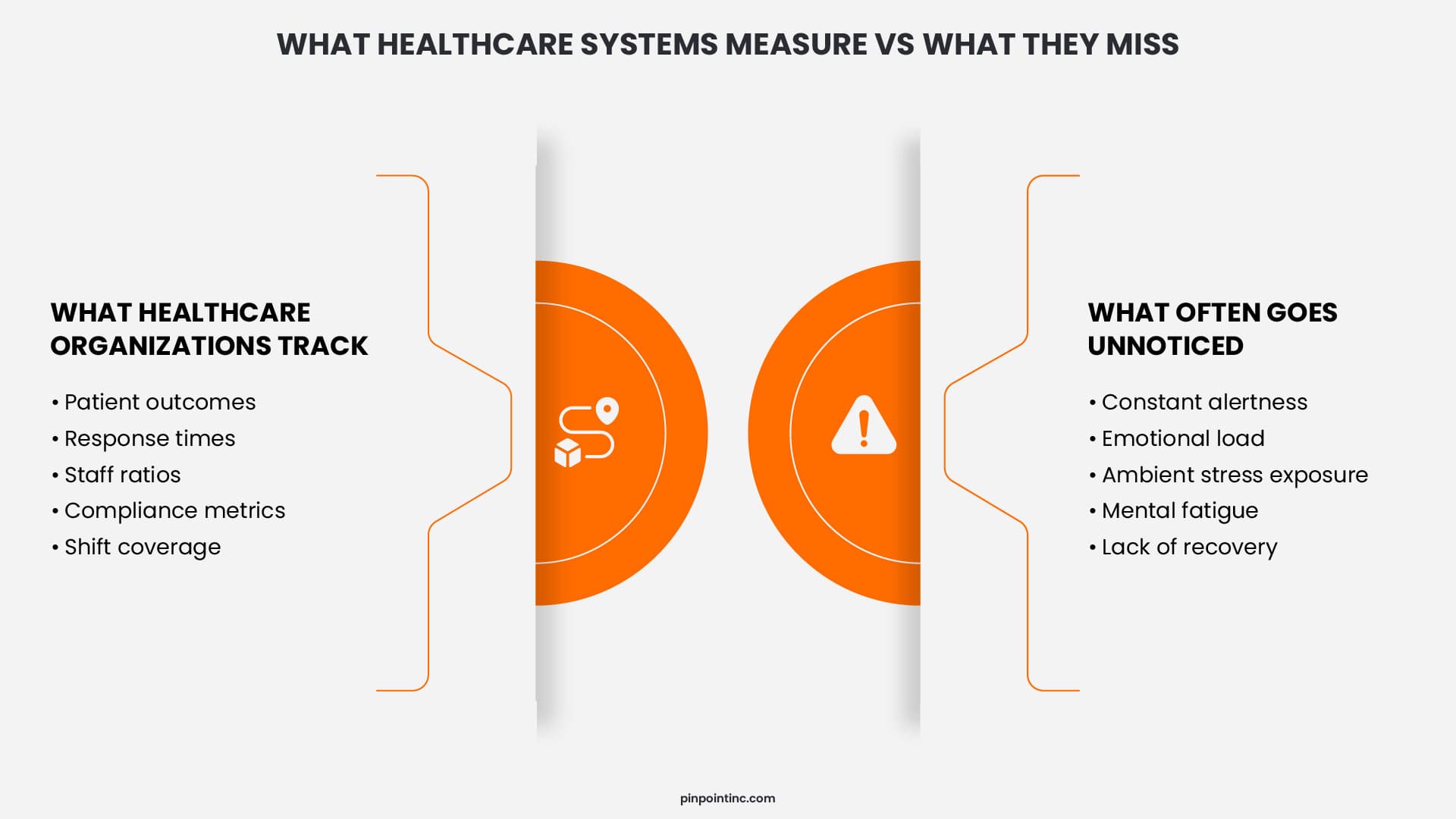
Ambient stress doesn’t always show up in clear metrics, which is why it often gets overlooked. It shows up in how people work.
You might notice response times getting slower, focus breaking more easily, or engagement dropping during routine tasks. Small mistakes become more frequent, not because of lack of skill, but because mental load is already high.
On their own, these shifts don’t seem significant. But when they happen across teams and over time, they start to affect productivity, safety, and overall performance in a very real way.
Why Workplace Stress Needs a System-Level Solution
At this point, it’s easy to assume the solution is personal. Better coping, more resilience, or simply learning to manage stress more effectively.
But that’s an individual response to a system-level problem. So what should healthcare organizations do?
The focus needs to shift toward reducing continuous exposure to pressure throughout the workday. In practice, this means improving how the environment supports staff, not just how staff respond to it. Many healthcare settings already take steps in this direction through training, staffing adjustments, and clearer workflows.
Even with these in place, one gap often remains. Staff still operate in environments like hospitals, rehabiliation center where they need to stay mentally alert for long periods without knowing how quickly support is available if needed. That uncertainty is a key driver of ongoing ambient stress.
This is where wearable panic button systems become relevant, not just as a safety tool, but as part of the environment itself.
They provide staff with a simple and immediate way to request support, which reduces the need to stay constantly on edge. When people know that help is accessible and response is reliable, their baseline level of alertness begins to shift.
Over time, this creates a more stable and supportive work environment, where focus improves and continuous mental load starts to reduce.
Pinpoint helps healthcare organizations implement wearable panic button systems that strengthen response, support staff, and reduce ongoing environmental pressure. Book a demo with Pinpoint to see how this can work within your facility.
FAQ’s
What is ambient stress in simple terms?
Ambient stress is a form of stress that comes from your environment rather than a single event. It builds through constant, low-level pressure such as noise, interruptions, or ongoing tension, which often goes unnoticed but accumulates over time.
What is ambient trauma and how is it different from regular trauma?
Ambient trauma develops through repeated exposure to stressful or emotionally heavy environments, even without a direct incident. Unlike traditional trauma, which comes from a specific event, ambient trauma builds gradually and affects how a person feels and responds over time.
What are common examples of ambient stress at work?
Ambient stress at work often comes from small but continuous factors. This includes constant interruptions, background noise, tense interactions, ongoing alerts, or the need to stay mentally alert throughout the day. These may seem minor individually but become significant through repetition.
What are common examples of ambient stress at work?
Ambient stress at work often comes from small but continuous factors. This includes constant interruptions, background noise, tense interactions, ongoing alerts, or the need to stay mentally alert throughout the day. These may seem minor individually but become significant through repetition.
Page Navigation
- What Is Ambient Stress?
- How Ambient Stress Builds in Everyday Work Environments
- What the Data Tells Us About Everyday Workplace Stress
- Ambient Stress vs Ambient Trauma: What’s the Difference?
- The Hidden Cost of Ambient Stress in the Healthcare Workplace
- Why Workplace Stress Needs a System-Level Solution
- FAQ’s