
When to Use Your De-Escalation Button With a Patient
Most patient situations don’t escalate all at once. They build. If you’ve worked a floor, an Emergency Department, behavioral health, or even a busy clinic, you already know this feeling: something’s off. The room feels tighter. The patient’s behavior shifts. Your instincts kick in. The mistake we’re taught to make is waiting for certainty. You don’t need certainty. You need awareness.
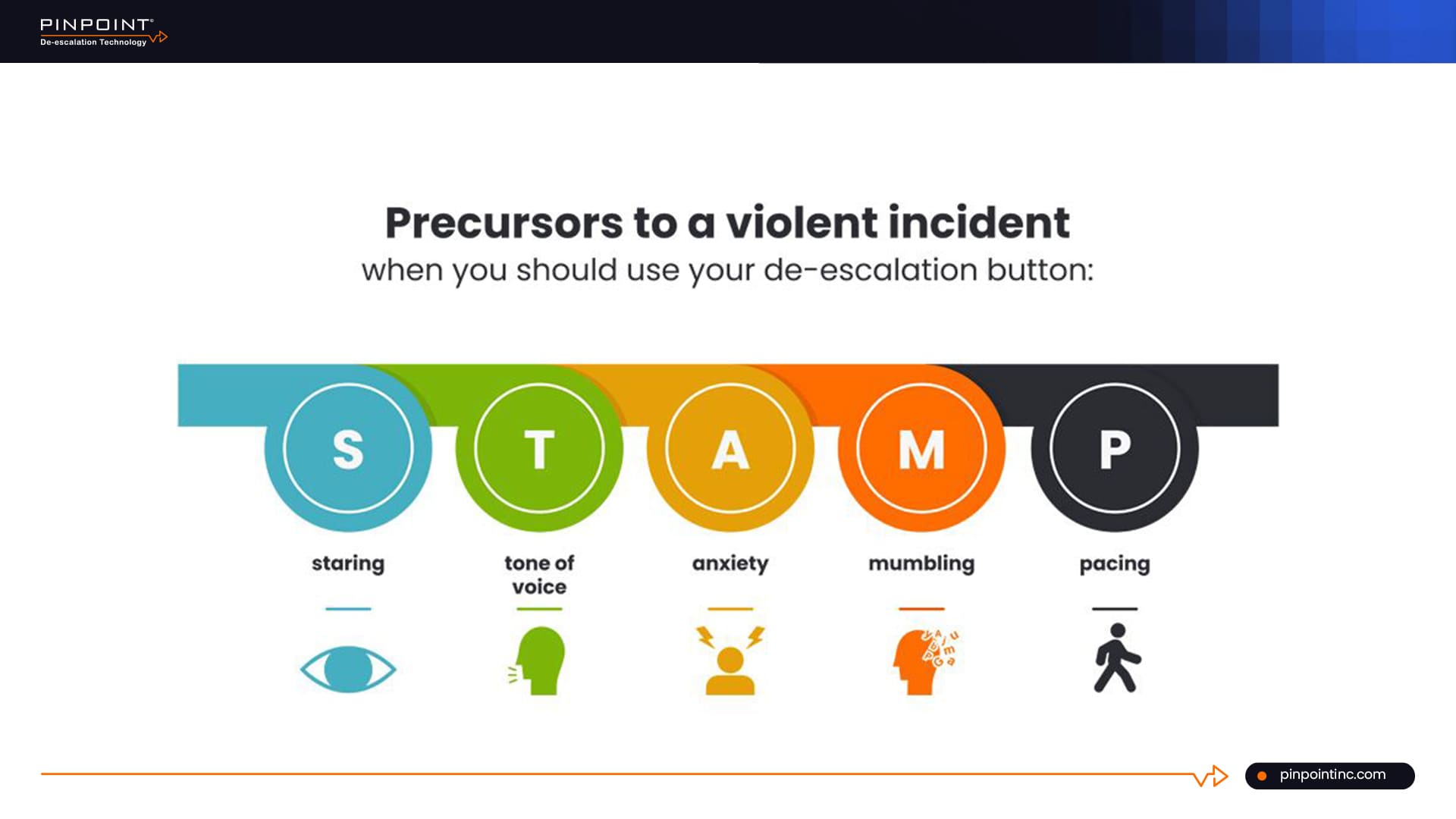
One simple way to recognize early warning signs is STAMP, a set of behaviors that often show up before a patient becomes verbally or physically aggressive.
STAMP: Signs a Patient May Be Escalating
You don’t need all of these. One is enough to justify using your de-escalation button.
S — Staring
A patient locks eyes and doesn’t break contact. The stare feels intense, focused, or confrontational.
What it can mean:
They feel threatened, unheard, or fixated. Their attention is narrowing.
Why it matters:
Loss of social awareness is often an early step toward escalation.
T — Tone of Voice
Their voice gets louder, sharper, sarcastic, or suddenly flat. Even if their words are still “appropriate,” the tone isn’t.
What it can mean:
Pain, fear, frustration, withdrawal, or feeling out of control.
Why it matters:
Once tone escalates, de-escalation gets harder the longer you wait.
A — Anxiety
You see pacing, clenched fists, rapid breathing, sweating, shaking, or visible distress.
What it can mean:
The patient is overwhelmed—emotionally, physically, or cognitively.
Why it matters:
An anxious patient may act impulsively, even without intent to harm.
M — Mumbling
They talk under their breath, repeat phrases, trail off, or speak incoherently.
What it can mean:
Internal distress, confusion, delirium, intoxication, or mental health crisis.
Why it matters:
When a patient turns inward, behavior can change suddenly and without warning.
P — Pacing
Repetitive walking, constant movement, or inability to sit still.
What it can mean:
Energy and agitation are building.
Why it matters:
Pacing often comes right before a verbal or physical outburst.
When Should You Press the De-Escalation Button?
- Before it turns into a problem.
- Before you’re backing toward the door.
- Before someone gets hurt.
If a patient is showing any STAMP behavior and your gut says, this could escalate, that’s the moment to act.
Using the de-escalation button is not overreacting. It’s protecting yourself, your coworkers, and the patient.
Early Action Is Safer for Everyone
Healthcare workers are trained to push through discomfort, manage chaos, and keep moving. But safety shouldn’t depend on endurance or luck.
De-escalation works best early, while communication is still possible and support can arrive before things spiral.
Trust what you see. Trust what you feel. And use the tools that are there to keep everyone safe.
Author:
Jordan Belous
Chief Marketing Officer of Pinpoint North America, where she leads marketing strategy, brand development, and digital growth initiatives. She earned a Bachelor of Science in Allied Health with a concentration in physical therapy sciences from the University of Tampa, bringing a unique interdisciplinary perspective that blends healthcare knowledge with modern marketing strategy.
Jordan writes about workplace violence prevention in healthcare, nurse safety, staff wellbeing, and emerging healthcare technologies that support frontline teams. Her work explores how hospitals and behavioral health facilities can build safer environments, reduce burnout and turnover, and implement safety systems that protect staff while preserving trust and dignity.
She is also the Chief Executive Officer of Whip Pediatric Cancer, a nonprofit dedicated to supporting children battling cancer and raising awareness and funds for pediatric cancer. Through her work with Whip, Jordan regularly visits pediatric cancer patients in hospitals and spends time alongside patients, families, and the clinicians who care for them. These experiences place her directly beside nurses and healthcare teams every day and reinforce her belief that the people providing care deserve to feel just as safe as the patients they serve.
Her experiences with Whip and her work at Pinpoint are closely connected, both driven by her deep respect for nurses and frontline healthcare workers. Seeing firsthand the compassion, resilience, and critical role nurses play has strengthened her commitment to advocating for safer healthcare environments and ensuring that those who dedicate their lives to caring for others have the protection and support they deserve.