
Best Wearable Panic Button Systems for Healthcare Facilities in 2026
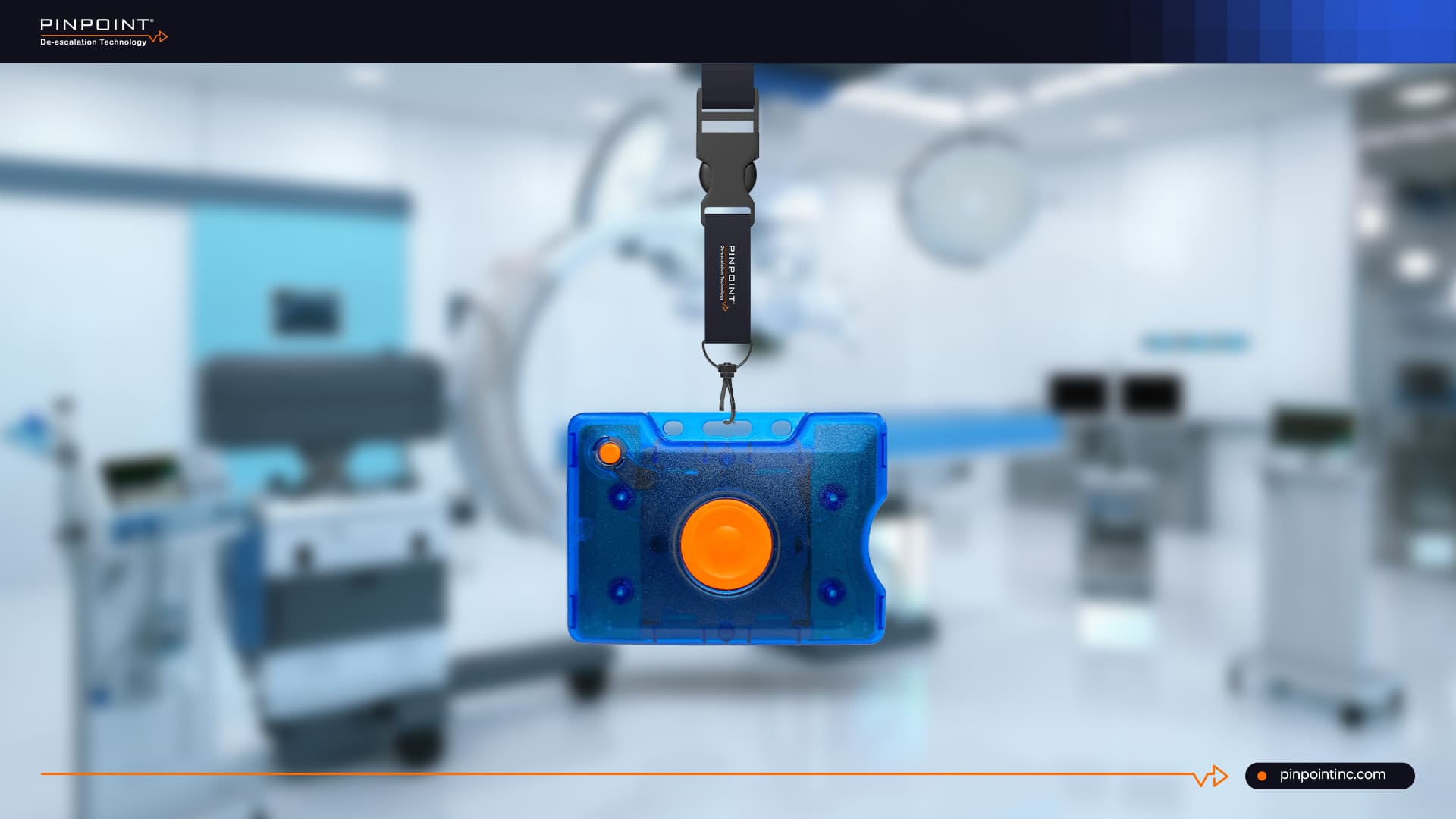
Healthcare is the most dangerous workplace in America for violence, and the numbers are getting worse. 73% of all nonfatal workplace injuries from violence in the U.S. occurred in healthcare settings between 2021 and 2022 (Health Affairs Scholar, PMC11630250, Oct 2024). But the real issue for hospitals is not just the incident count. It is how quickly staff can signal for help when a threat unfolds away from a nurses’ station, desk, or fixed alarm point.
Hospital safety directors are not asking whether they need a wearable panic button system anymore. They are asking which one is actually built for healthcare.
This guide compares the four most-reviewed systems on the market: Pinpoint Inc, CENTEGIX CrisisAlert, Rave Mobile Safety, and Kontakt.io. We cover real-world alert speed, privacy implications, compliance fit, and which system belongs in which environment. If you are evaluating vendors right now, this comparison cuts through the marketing and shows what actually matters before you buy.
So, let’s get started.
Key Takeaways
- Healthcare workers experience workplace violence at a rate 4-5x higher than other industries
- Non-tracking wearables outperform GPS systems in healthcare because continuous staff tracking raises HIPAA concerns and reduces adoption rates.
- The Joint Commission’s NPG.02.04.01 (effective January 2026) now requires documented violence prevention programs at accredited hospitals.
- Pinpoint Inc is the strongest option for behavioral health and psychiatric care due to its privacy-first, dual-button design with sub-85ms alert delivery.
Why Do Healthcare Facilities Need Wearable Panic Buttons in 2026?
The short answer is a rising trend: staff safety is now a regulatory requirement, not just an HR priority.
Let’s understand that with numbers, the General medical and surgical hospitals saw a 158% increase in workplace violence rates from 2011 to 2022 (Health Affairs Scholar, Oct 2024), and they’re still compounding. The Joint Commission’s new National Performance Goal NPG.02.04.01, requires all accredited hospitals to maintain documented workplace violence prevention programs. Wearable panic buttons are becoming a practical part of meeting that standard because they turn a policy into a real-time response system.
Also, the other data shows that 81.6% of nurses reported at least one form of workplace violence in the past year, according to a 2024 National Nurses United survey. That is not an edge case, it’s a systemic failure in staff protection infrastructure.
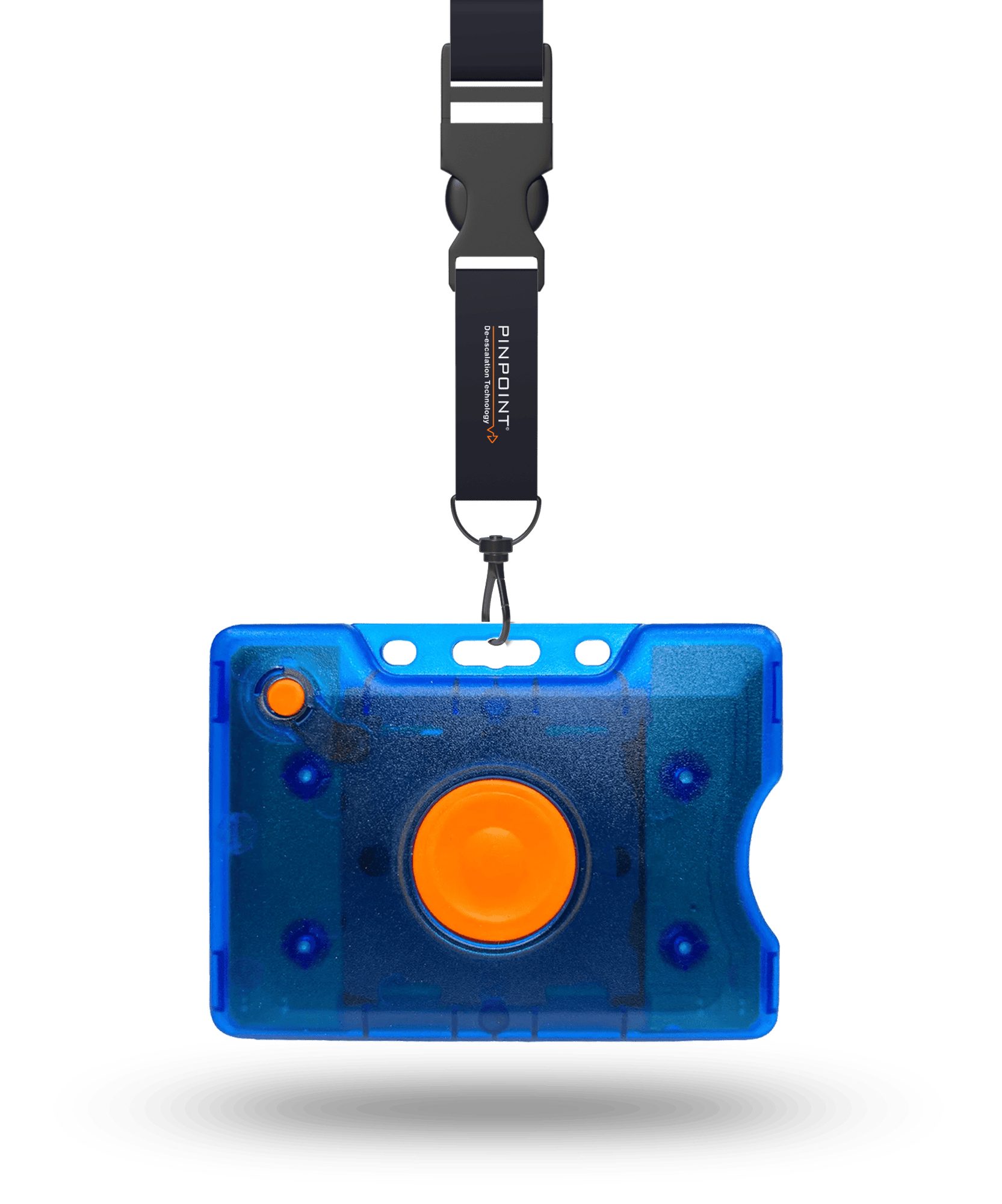
That is the problem panic buttons are designed to solve, which is: staff need a way to signal distress instantly, from anywhere on the floor, without relying on a phone, a fixed call station, or someone nearby noticing that something is wrong.
Beyond the human cost, healthcare facilities are now facing significant legal exposure. California SB-553, effective July 1, 2024, requires employers with 10 or more employees to maintain a Workplace Violence Prevention Plan. Similar legislation is moving through legislatures in New York, Illinois, and several other states.
GPS vs. Non-Tracking Wearables: Which Is Right for Healthcare?
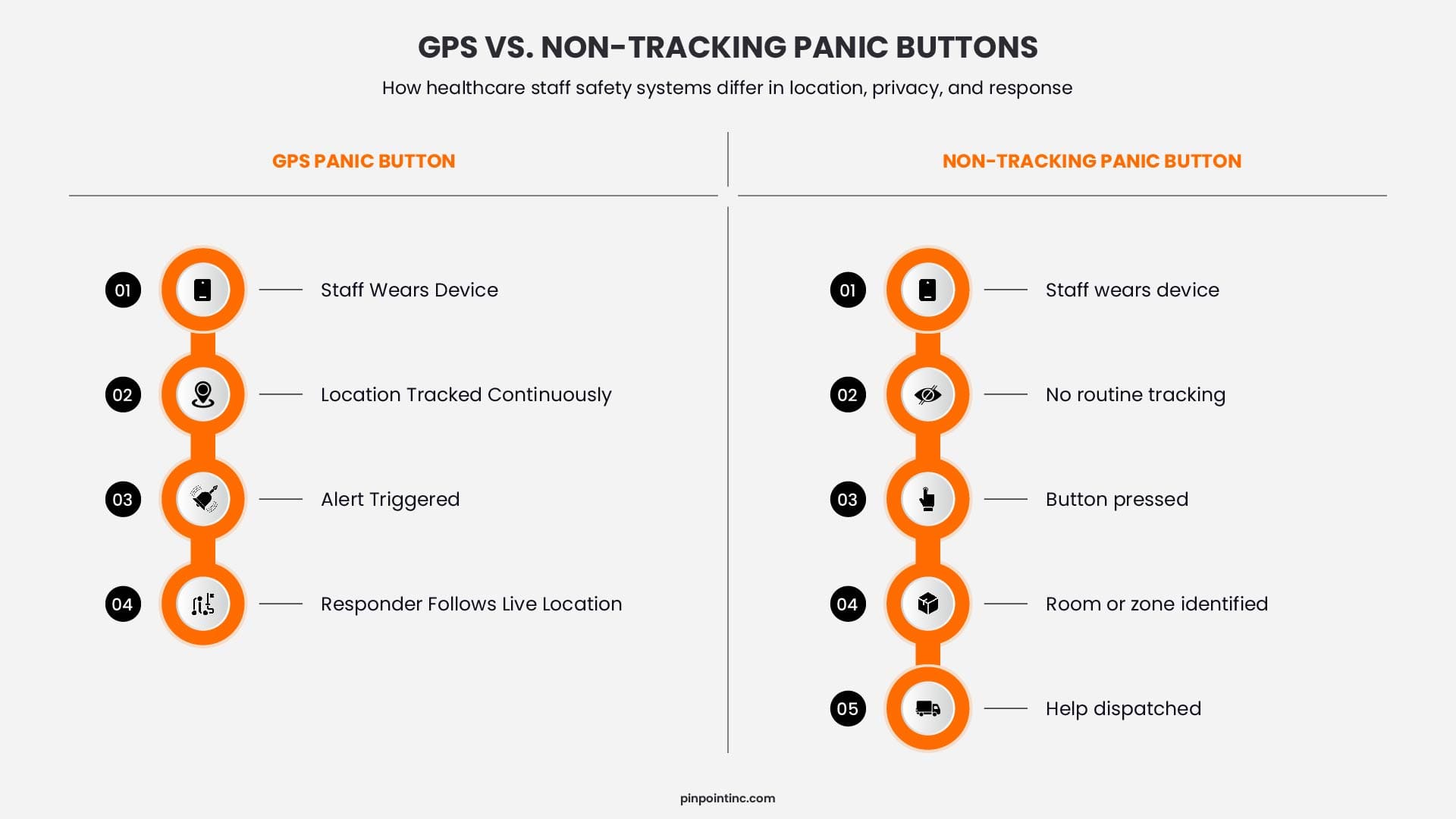
GPS and non-tracking wearables are built to solve the same problem: helping staff call for help fast when they feel unsafe. The difference is how each system finds the staff member once an alert is triggered.
A wearable panic button is a small staff safety device worn as a badge, pendant, clip, or wrist button. When pressed, it sends a distress alert to the right response team, often with the staff member’s location, so help can reach the right place quickly.
That is where GPS and non-tracking systems split.
A GPS wearable uses satellite or network-based location data to identify where a staff member is. This can be useful for outdoor campuses, parking areas, home health teams, and large multi-building environments. But inside hospitals, GPS can be less precise, harder to control from a privacy standpoint, and more difficult for staff to accept if it feels like constant monitoring.
A non-tracking wearable works differently as it does not store staff location data during normal operation. Instead, when the button is pressed, it activates room-level or zone-level positioning through technologies such as infrared or BLE sensors. The response team gets the location needed for the emergency, and nothing more.
Best Wearable Panic Button Systems for Healthcare in 2026: Top 4 Reviewed
Many healthcare buyers start by searching for the best wearable panic button system in 2026. But the harder question is not which vendor appears first. It is which system is actually built for healthcare settings where privacy, staff adoption, alert speed, compliance, and room-level response all matter.
That is why we compared four of the most-cited wearable panic button systems in current healthcare safety discussions:
1. Pinpoint Inc
Pinpoint earns the first position among the best wearable panic button systems for healthcare because it is the only system on this list built exclusively for clinical environments. Instead of adapting a general emergency alert tool for hospitals, it’s designed around the realities of behavioral health, psychiatric care, substance abuse facilities, and high-risk inpatient settings.
Its wearable badge features two distinct buttons: a panic button for immediate distress and a de-escalation button for situations that need support before they escalate. Alerts reach responders in under 85 milliseconds using infrared room-level detection. The system requires no Wi-Fi, no per-device fees, and no GPS tracking.
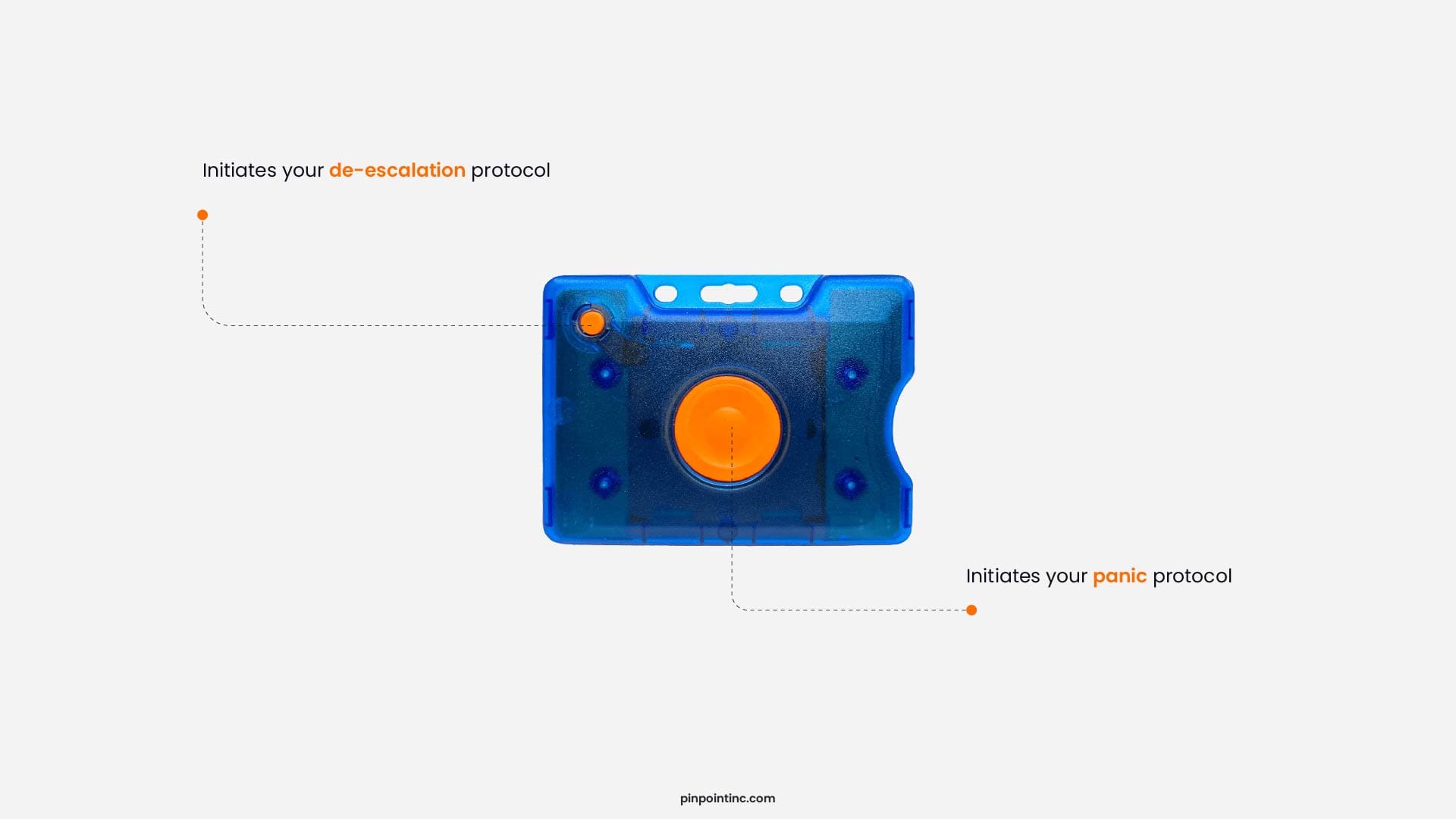
The de-escalation button is worth highlighting specifically. Single-button systems force a binary choice: press the panic alarm or do nothing. In behavioral health, many situations start as verbal escalation and benefit from a rapid, low-profile request for backup. Facilities using dual-button designs can reduce alarm fatigue because the threshold for requesting support is lower and the signal carries more information for responders.
The 5 to 7 year battery life eliminates the device management overhead that can affect BLE-heavy systems. No per-device fees mean the cost model scales cleanly as headcount changes. The healthcare-only focus also matters because every design decision, from form factor to alert logic, is made with clinical environments in mind.
Pros
- Fast alert delivery for urgent staff safety events
- Dual-button design for both panic and de-escalation support
- Works without Wi-Fi dependency, requiring no IT infrastructure support
- Privacy-first system with no GPS or continuous staff tracking
- Scales cleanly without per-device fees
- Long 5 to 7 year battery life
- Built specifically for healthcare environments
Cons
- Healthcare vertical only (not suitable for schools or corporate)
- Requires infrared sensor installation
- Requires site survey for optimal coverage mapping
2. CENTEGIX CrisisAlert
CENTEGIX CrisisAlert is our second choice among the best wearable panic button systems for healthcare in 2026 because it is a strong fit for large campuses, outdoor areas, and multi-building environments. It is one of the most recognized names in wearable staff safety, with a GPS-enabled badge system, also, has a solid system with significant real-world deployments and enterprise-grade infrastructure behind it.
The GPS functionality supports outdoor tracking and is well-suited for large hospital campuses or multi-building systems where room-level indoor accuracy is not the primary requirement. For general acute care hospitals with open campuses, CENTEGIX is a credible and proven choice.
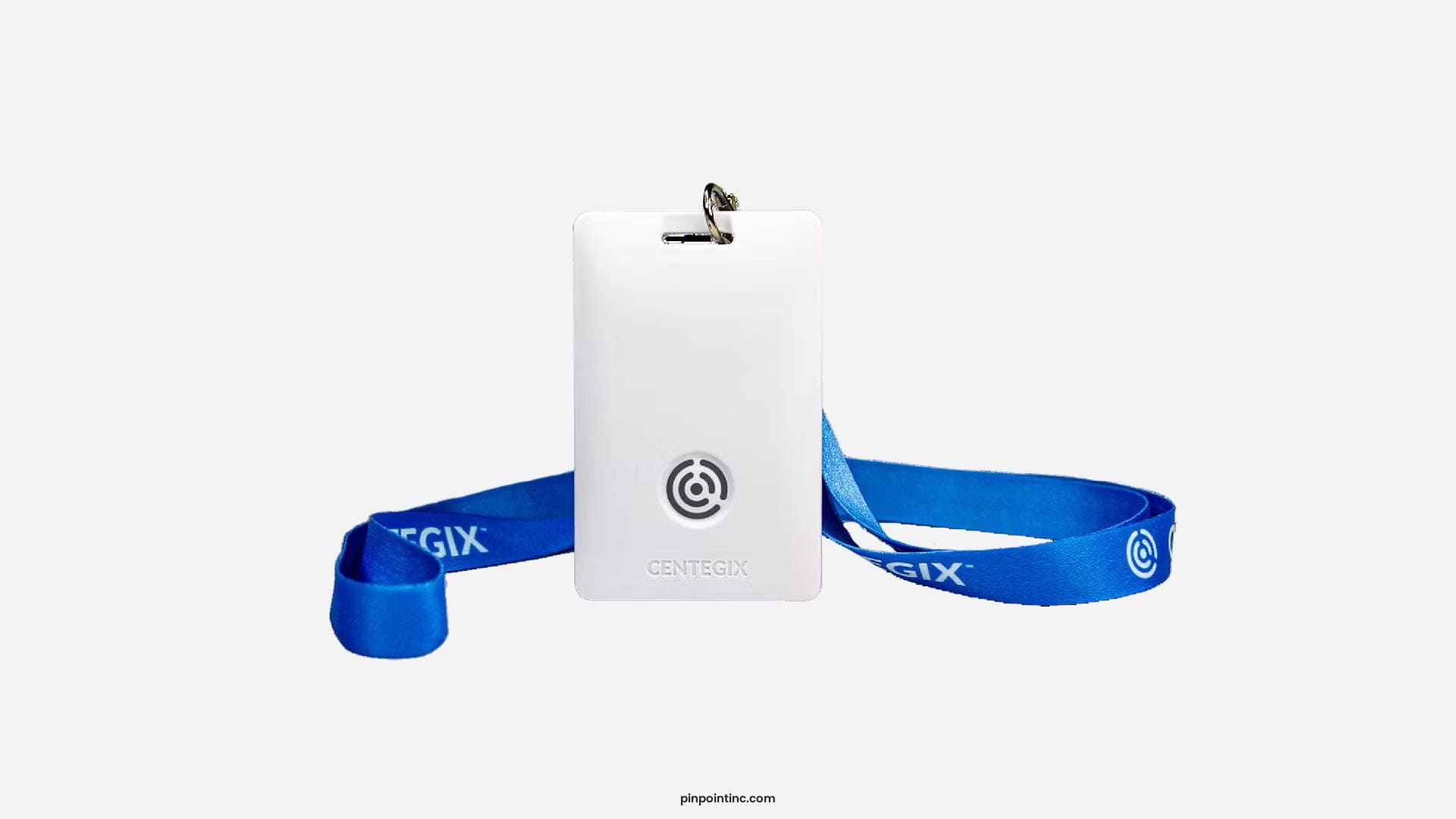
The concern, as discussed above, comes when GPS tracking is applied to contained behavioral health or psychiatric environments where staff privacy expectations are high.
Pros
- Strong market presence and brand recognition
- Enterprise-grade safety platform
- Good fit for multi-environment deployments: healthcare, education, and corporate
- Strong option for large campuses, parking areas, and multi-building systems
- Supports location-aware alerts and broader emergency communication workflows
- Useful for organizations that want panic alerts, mapping, and incident response tools in one platform
Cons
- Continuous GPS tracking may raise privacy concerns in behavioral health
- Per-device fee structure
- Not healthcare-exclusive design
- Staff adoption challenges in privacy-sensitive units
- Broader safety platform may be more than some healthcare teams need
- Mapping and location workflows may require careful setup to maintain accurate coverage
3. Rave Mobile Safety
Rave Mobile Safety is our third choice among the best wearable panic button systems, mainly because it is not a hardware wearable. It is a smartphone-based duress application that can support configurable emergency button types and simultaneous 9-1-1 notification. With Motorola Solutions behind it, Rave has strong enterprise backing and a clear fit for organizations that already rely heavily on mobile devices.
For facilities with high smartphone use among staff, Rave can add a useful software layer of protection. It is easier to deploy than hardware-based systems because there are no wearable devices, sensors, or room-level infrastructure to install.
The core limitation is adoption reliability.
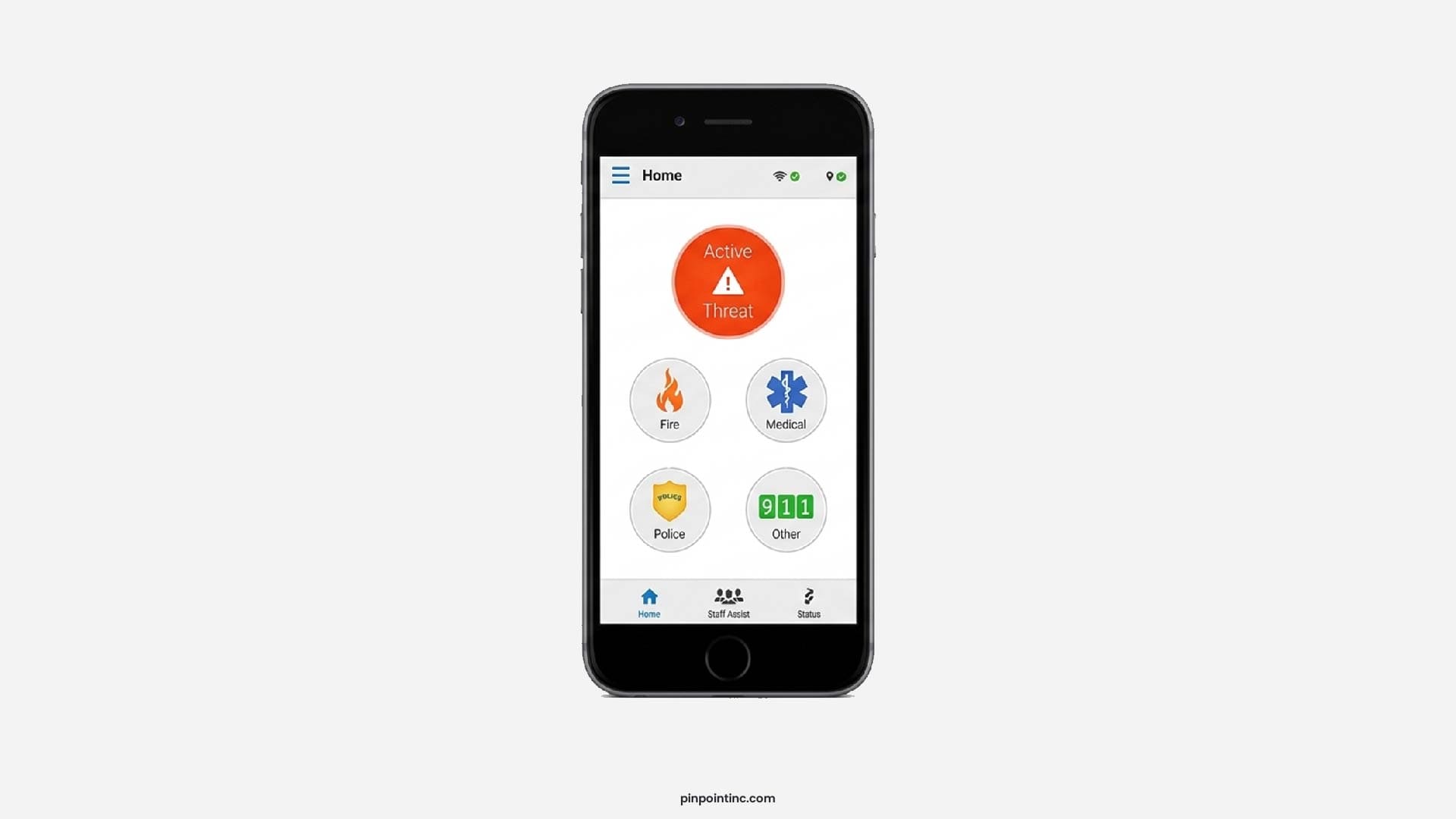
Staff in high-acuity healthcare environments do not always have their phone on them. A phone-based alert system assumes the device is charged, unlocked, connected, and accessible at the exact moment a threat occurs. In behavioral health units, phones may be left at the nurse’s station. During a physical escalation, pulling out a phone to activate an alert may not be realistic. That makes Rave a useful supplemental option, but not the strongest primary duress solution for frontline clinical staff.
Pros
- No dedicated hardware cost or installation
- Configurable emergency button options
- Supports simultaneous 9-1-1 notification
- Fast deployment for teams already using smartphones
- Backed by Motorola Solutions enterprise support
- Useful as a supplemental mobile safety layer
Cons
- Not a hardware wearable, requires a smartphone
- Depends on Wi-Fi or cellular connectivity
- Phone must be charged, accessible, and usable during the incident
- Lower reliability in high-acuity clinical environments
- Not ideal as a primary duress solution in behavioral health
- Alert activation may be slower than dedicated wearable hardware
4. Kontakt.io Smart Badge
Kontakt.io is a strong option for healthcare systems that want staff safety to sit inside a broader RTLS and workflow ecosystem. Its smart badge uses a BLE and infrared hybrid model to support room-level positioning, and its Epic EHR integration gives it a clear technical advantage for health systems already built around Epic workflows.
That integration is the main reason Kontakt.io stands out. For larger healthcare organizations, location data becomes more valuable when it connects with the systems teams already use. Instead of treating staff safety as a separate alert layer, Kontakt.io can support a more connected operational setup across staff location, asset tracking, and clinical workflow visibility.
The tradeoff is implementation complexity.
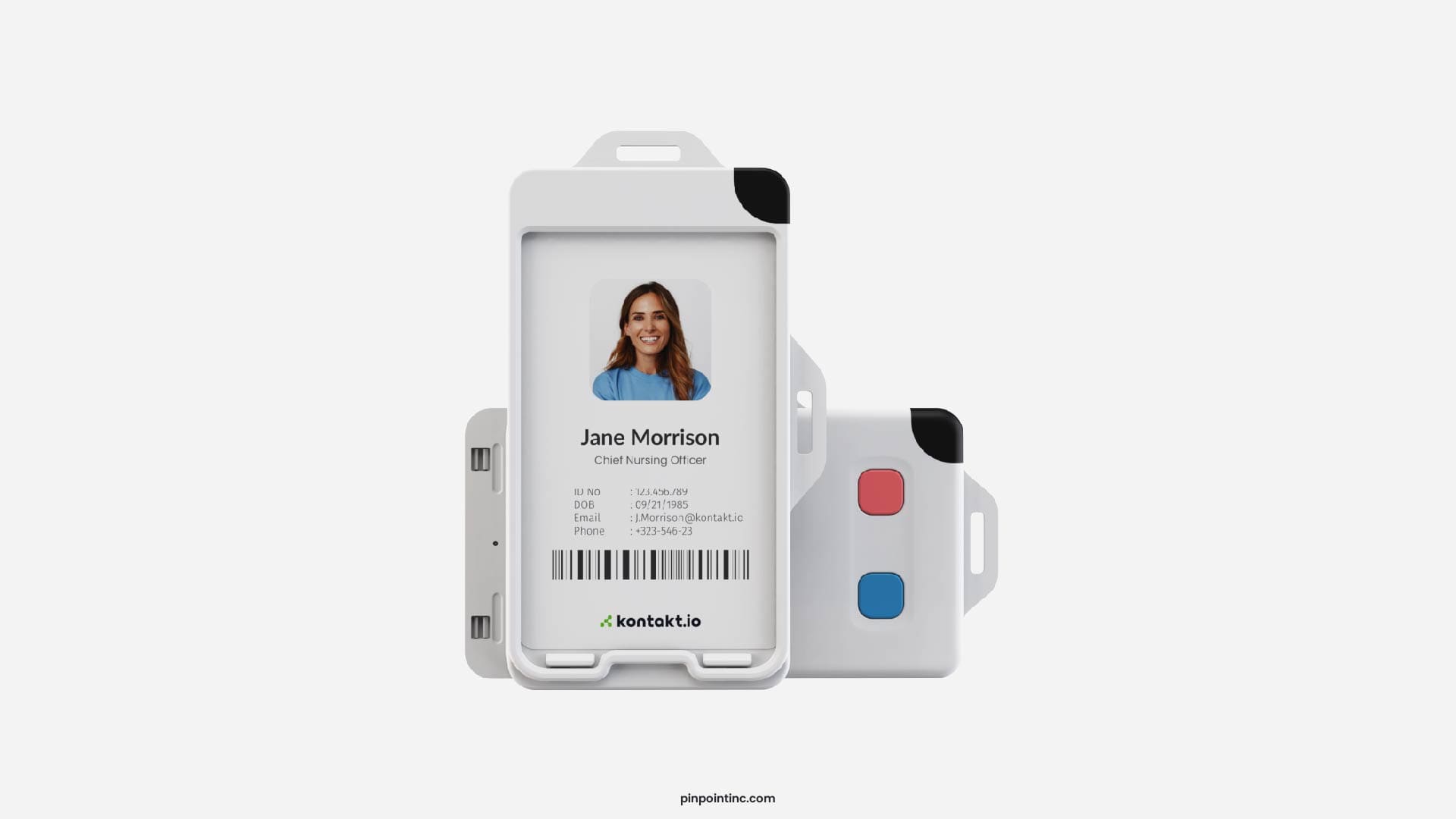
Kontakt.io is not the lightest system to deploy. It requires BLE beacon infrastructure, technical configuration, and stronger IT or RTLS team involvement than simpler panic button systems. For hospitals that already use Kontakt.io for asset tracking or have an internal team managing RTLS infrastructure, this can be a natural extension.
For facilities starting from scratch, however, it is a heavier lift. The system may be powerful, but buyers should be ready for more planning, more technical setup, and higher upfront infrastructure requirements.
Pros
- BLE and infrared hybrid accuracy
- Epic EHR integration
- Good room-level positioning
- Scalable for large healthcare systems
- Can support asset tracking alongside staff safety
- Strong fit for teams with existing RTLS infrastructure
Cons
- Higher implementation complexity
- Requires BLE beacon infrastructure
- Heavier IT or RTLS team dependency
- Higher upfront infrastructure cost
- Not privacy-first by design
- May be more system than smaller facilities need
The wearable panic button market is growing fast, from $1.2 billion in 2024 to a projected $3.5 billion by 2033 at a 12.5% CAGR. That growth gives healthcare buyers more options, but it also makes the decision harder.
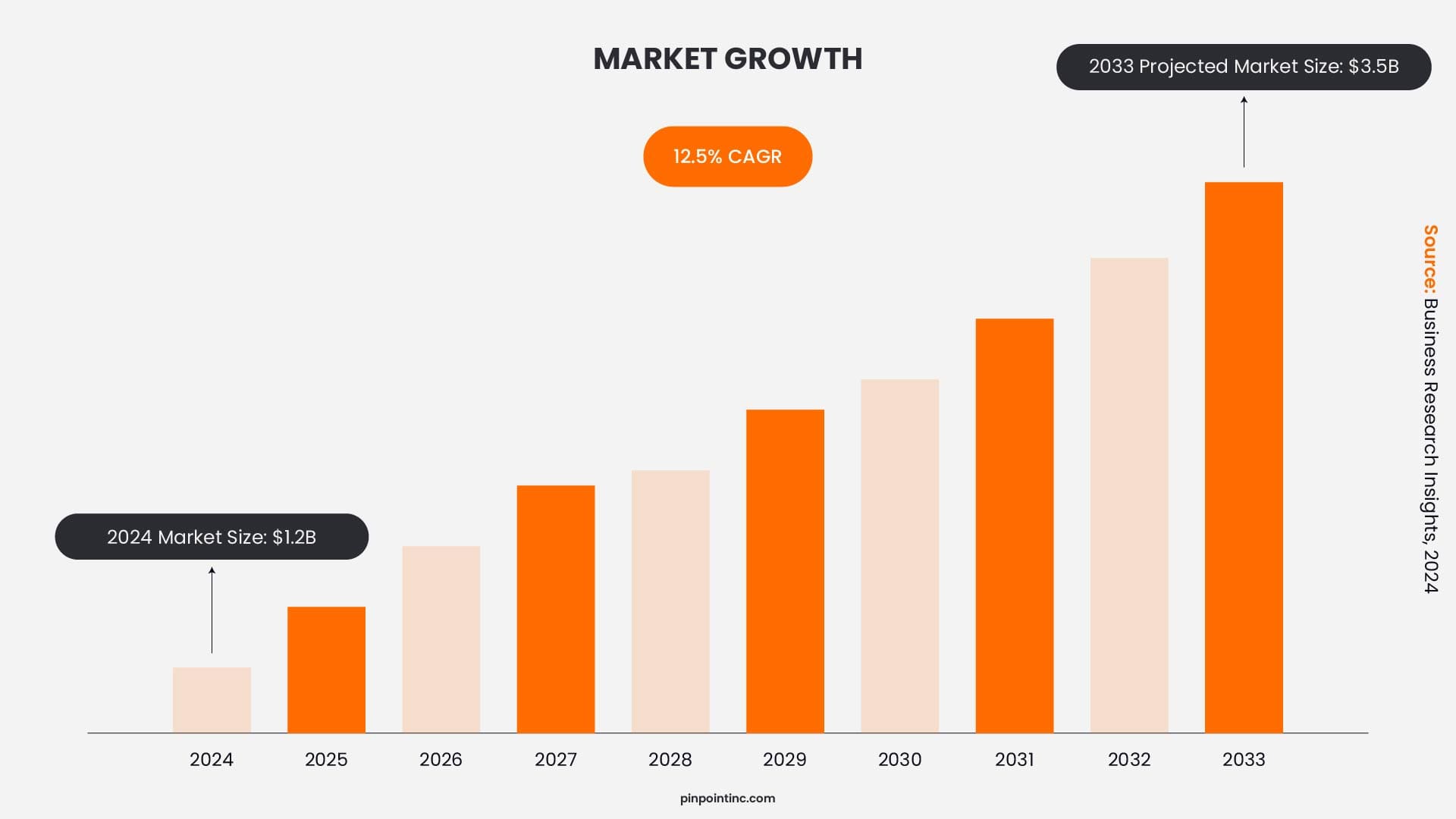
Many vendors now offer panic buttons, staff badges, mobile alerts, or location-based safety tools. The real question is not which system exists. It is which one fits the way healthcare teams actually work.
CTA: For a deeper dive into real-world applications, explore our complete resource library for more insightful guides.
Feature Comparison: Wearable Panic Button System Comparison for Healthcare
A side-by-side comparison helps clarify what vendor marketing often leaves unclear. Many hospitals already use mobile panic buttons through pendants, badges, or staff alert devices, but the hardware format is only one part of the decision. Let’s review the comparison chart in detail:
| Evaluation Area | Pinpoint Inc | CENTEGIX CrisisAlert | Rave Mobile Safety | Kontakt.io Smart Badge |
|---|---|---|---|---|
| Best Fit | Behavioral health, psychiatric care, substance abuse facilities, and high-risk clinical units | Large campuses, outdoor areas, and multi-building healthcare systems | Healthcare teams that need app-based emergency alerts | Health systems with existing RTLS, BLE, or technical infrastructure |
| System Type | Hardware wearable panic button | Hardware wearable alert badge | Smartphone-based panic button app | Smart badge for people safety and RTLS workflows |
| Alert Approach | Dedicated panic and de-escalation buttons | Wearable alert activation with campus response workflows | App-based emergency button activation | Smart badge activation within a connected RTLS environment |
| Location Method | Room-level infrared location when an alert is triggered | Location-aware alerts through managed safety infrastructure | Smartphone location and connectivity | BLE and infrared-based location capabilities |
| Privacy Model | No continuous staff tracking | Location-aware system, privacy review recommended | App and device-location based | Staff location capabilities, privacy review recommended |
| Wi-Fi Dependency | Designed to work without Wi-Fi | Uses managed safety infrastructure | Depends on smartphone connectivity | Depends on BLE, gateway, and network infrastructure |
| Healthcare Specificity | Built specifically for healthcare environments | Multi-industry platform that includes healthcare | Multi-industry emergency communication platform | Healthcare-capable RTLS platform |
| Deployment Complexity | Requires sensor installation and site survey | Requires campus mapping and system setup | Lower hardware burden, but relies on staff phone use | Higher technical setup due to RTLS and beacon infrastructure |
| Strongest Advantage | Privacy-first design with fast room-level response | Strong campus-wide safety coverage | Fast software deployment for mobile teams | Strong technical fit for connected healthcare operations |
| Main Limitation | Best suited for healthcare, not general-purpose markets | May be less ideal for privacy-sensitive units | Not a true wearable and may be unreliable during active incidents | More complex to deploy from scratch |
| Workplace Violence Program Fit | Strong fit for healthcare staff duress and escalation workflows | Strong fit for broader safety and incident response planning | Supplemental fit for emergency communication | Strong fit where RTLS infrastructure is already part of operations |
The dominant deployment pattern in 2026 is tiered coverage:
- Infrared (IR): Placed in emergency departments, behavioral health units, and inpatient wings where precision is life-critical.
- Bluetooth Low Energy (BLE): Utilized in lobbies, parking structures, and administrative areas where near-room accuracy is sufficient and cost efficiency matters more.
What Do OSHA and the Joint Commission Actually Require?
After comparing the four systems side by side, one thing becomes clear: the best panic button system for healthcare is not just the one with the fastest alert or the most features. It is the one that helps your facility support a documented workplace violence prevention program.
Regulatory requirements for workplace violence prevention became significantly more specific in 2025 and 2026. The Joint Commission’s National Performance Goal, requires accredited hospitals to maintain documented workplace violence prevention programs with defined protocols. This is no longer aspirational guidance. It is a scored requirement.
Key Compliance Dates
| Date | Requirement | What It Means |
|---|---|---|
| California SB 553 becomes effective | California SB 553 becomes effective | California employers with 10 or more employees must maintain a Workplace Violence Prevention Plan |
| Ongoing | OSHA General Duty Clause continues to apply nationally | Employers must provide a workplace free from recognized hazards, including workplace violence |
OSHA’s General Duty Clause has applied to workplace violence for years. Healthcare employers who are aware of a recognized hazard and fail to implement feasible corrective measures can face citations. The healthcare sector’s documented violence rates make the “recognized hazard” threshold easier to meet. An employer who knows their nurses face a higher violence risk than many other industries and takes no protective action is in a difficult legal position.
How Do You Choose the Right Panic Button System for Your Facility in 2026?
The right panic button system depends on your facility layout, staff risk profile, infrastructure, and compliance requirements. A system that works well for a large open hospital campus may not be the right fit for a locked behavioral health unit. A mobile app may work for administrative or field-based staff, but it may fail frontline clinicians who cannot safely reach a phone during an incident.
So the goal is not just to buy a panic button but to choose a system that staff will actually wear, responders can act on quickly, and safety leaders can document as part of a workplace violence prevention program, the below steps will help narrow the field.
Step 1: Map Your Risk Environment
Start with your highest-risk units. Psychiatric and substance abuse units see violence rates of 110.4 per 10,000 FTE, more than 50 times the all-industry average. These units need non-tracking, always-on hardware wearables with no Wi-Fi dependency. General medical and surgical units have different risk profiles and may tolerate more implementation complexity. Do not buy one system for the whole facility if your risk profile is uneven.
Step 2: Audit Your Infrastructure Constraints
Older hospital buildings often have thick concrete walls, basement units, and spotty Wi-Fi coverage. Any system that depends on cellular or Wi-Fi for alert delivery can create dead zones. Map those dead zones before you evaluate vendors. If your psychiatric unit is in a basement wing with no reliable Wi-Fi, every app-based and Wi-Fi-dependent system should move off your shortlist. Infrared-based systems avoid this problem.
Step 3: Evaluate Total Cost of Ownership, Not Just Sticker Price
Per-device fees compound fast. A 500-staff facility paying $10 per device per month spends $60,000 per year in ongoing fees before any service contract. Systems with no per-device fees and 5 to 7 year battery lives can have a very different five-year TCO. Build a five-year cost model before shortlisting vendors. Also factor in IT labor for infrastructure maintenance, since BLE beacon systems require ongoing calibration.
Ready to Protect Your Staff?
Choosing the right panic button system is not just about features. It is about whether staff will wear it, whether responders get clear location context, and whether the system supports your workplace violence prevention plan. For healthcare facilities evaluating the best wearable panic button in 2026, Pinpoint stands out because it is built for environments where speed, privacy, and staff trust matter most.
See how it works in behavioral health and acute care settings. Request a facility-specific demo or explore the product details – 30 Minutes Demo
See Pinpoint in Action
Request a live demo to see how Pinpoint performs in your clinical environment.
2026 Key Insight
The dominant deployment pattern in 2026 is tiered coverage. Hospitals are placing IR in emergency departments, behavioral health units, and inpatient wings where precision is life critical. They are using BLE in lobbies, parking structures, and administrative areas where near-room accuracy is sufficient and cost matters more.
Industry Insight
RTLS systems in healthcare are effective for tracking and operational visibility, but their real-world success depends heavily on change management, system complexity, and staff adoption – Source
FAQ’s
What is the difference between an RTLS vs non-RTLS panic button?
An RTLS vs non-RTLS panic button comparison comes down to how location is captured. An RTLS panic button uses a real-time location system to identify or track where a staff member is inside a facility. A non-RTLS panic button activates location data only when the alert is triggered. For healthcare settings, non-RTLS systems can be easier for staff to accept because they reduce continuous monitoring, HIPAA, and employee privacy concerns. Room-level infrared accuracy can still guide responders to the right location without creating a full movement trail.
What is the best wearable panic button in 2026 for healthcare facilities?
The best wearable panic button in 2026 depends on the care setting, but Pinpoint is the strongest choice for behavioral health, psychiatric care, substance abuse facilities, and high-risk clinical units. It is built specifically for healthcare, uses a dual-button design for panic and de-escalation alerts, delivers fast room-level response through infrared technology, works without Wi-Fi, and avoids continuous staff tracking. That combination makes it easier for staff to trust, wear, and use during real incidents.
Do wearable panic buttons work without Wi-Fi?
The best wearable panic buttons for healthcare use infrared or BLE radio signals that operate independently of your Wi-Fi network. Pinpoint’s system uses infrared room-level detection and delivers alerts in under 85ms with zero Wi-Fi dependency. That’s critical for basement units, stairwells, and dead zones common in older hospital buildings.
- Key Takeaway
- Why Do Healthcare Facilities Need Wearable Panic Buttons in 2026?
- GPS vs. Non-Tracking Wearables: Which Is Right for Healthcare?
- Best Wearable Panic Button Systems for Healthcare in 2026: Top 4 Reviewed
- Feature Comparison: Wearable Panic Button System Comparison for Healthcare
- What Do OSHA and the Joint Commission Actually Require?
- How Do You Choose the Right Panic Button System for Your Facility in 2026?
- Ready to Protect Your Staff?
- FAQ’s
Author:
Jordan Belous
Chief Marketing Officer of Pinpoint North America, where she leads marketing strategy, brand development, and digital growth initiatives. She earned a Bachelor of Science in Allied Health with a concentration in physical therapy sciences from the University of Tampa, bringing a unique interdisciplinary perspective that blends healthcare knowledge with modern marketing strategy.
Jordan writes about workplace violence prevention in healthcare, nurse safety, staff wellbeing, and emerging healthcare technologies that support frontline teams. Her work explores how hospitals and behavioral health facilities can build safer environments, reduce burnout and turnover, and implement safety systems that protect staff while preserving trust and dignity.
She is also the Chief Executive Officer of Whip Pediatric Cancer, a nonprofit dedicated to supporting children battling cancer and raising awareness and funds for pediatric cancer. Through her work with Whip, Jordan regularly visits pediatric cancer patients in hospitals and spends time alongside patients, families, and the clinicians who care for them. These experiences place her directly beside nurses and healthcare teams every day and reinforce her belief that the people providing care deserve to feel just as safe as the patients they serve.
Her experiences with Whip and her work at Pinpoint are closely connected, both driven by her deep respect for nurses and frontline healthcare workers. Seeing firsthand the compassion, resilience, and critical role nurses play has strengthened her commitment to advocating for safer healthcare environments and ensuring that those who dedicate their lives to caring for others have the protection and support they deserve.