Schedule a Demo
Schedule a Demo
De-escalation Technology

The Only Wearable Non-Tracking Panic Button Built for Healthcare

Non-TrackingHardwiredSupervised

Pinpoint provides instant, room-level duress signaling for hospitals, residential rehabs, and behavioral health centers. Our solution is a wearable panic button built specifically for healthcare environments, delivering immediate de-escalation and emergency response without invasive location tracking, helping staff quickly summon assistance during unpredictable and high-risk situations.

Pinpoint featured on HBO Max workplace safety documentary
  • 0+

    Years in healthcare safety

  • <0ms

    Alert delivery to responders

  • 5–7yr

    Badge battery, no daily charging

  • 0

    Healthcare facilities, worldwide

Our solutions

One Main Solution. Optional Add-Ons.

The Pinpoint Wearable Panic Button is our main solution and the foundation of every Pinpoint system. Patient Nurse Call and Patient Safety Check (Q15) are optional add-ons that run on the same infrastructure, so the wearable panic button must be installed first.

Main solution

Wearable Panic Button

Staff summon help with one press. Room-level duress alerts reach responders without tracking where staff are, on hardwired infrastructure that does not depend on Wi-Fi.

  • Two alert levels from one badge
  • Non-tracking and privacy-first
  • Supervised, hardwired, 5–7 year battery
Optional add-on

Patient Nurse Call

Lets patients call for help from anywhere in the facility using the same Pinpoint infrastructure. Requires the wearable panic button system.

Optional add-on

Patient Safety Check (Q15)

Documents patient observation rounds with a badge tap, on the same badge staff already wear for panic alerts. Requires the wearable panic button system.

Add-ons are not sold as standalone systems. Start with the wearable panic button, then extend it to patients when you are ready.
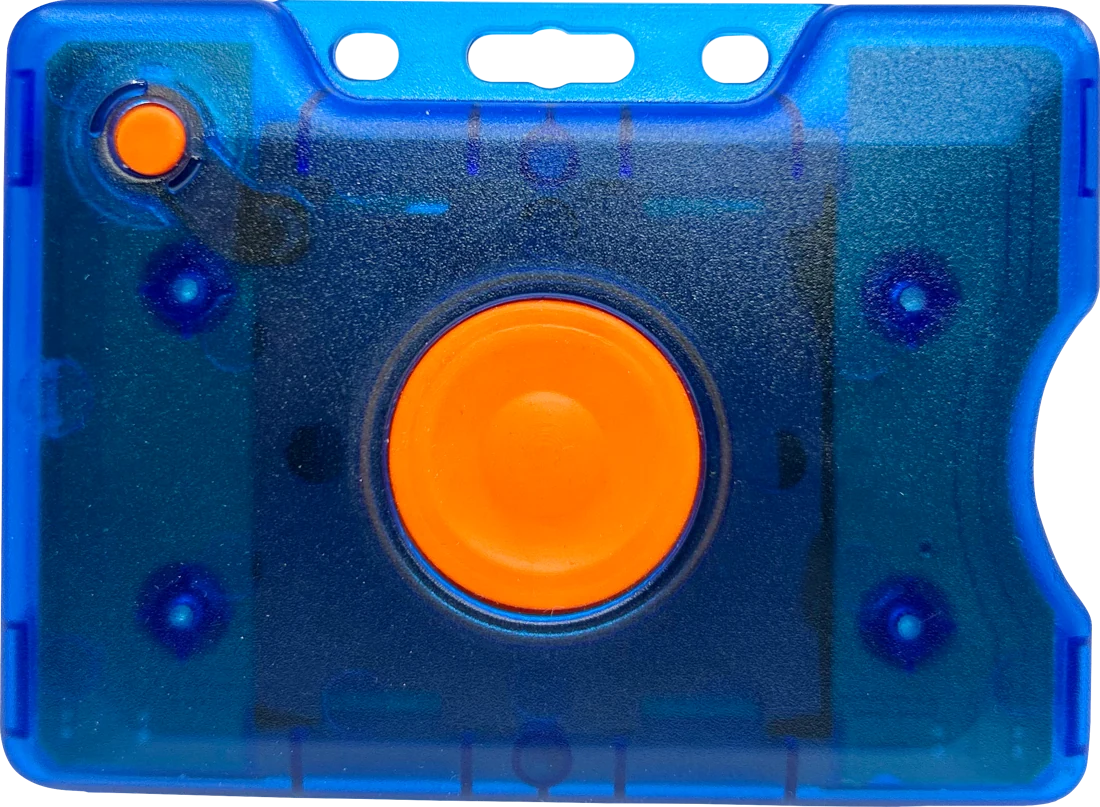
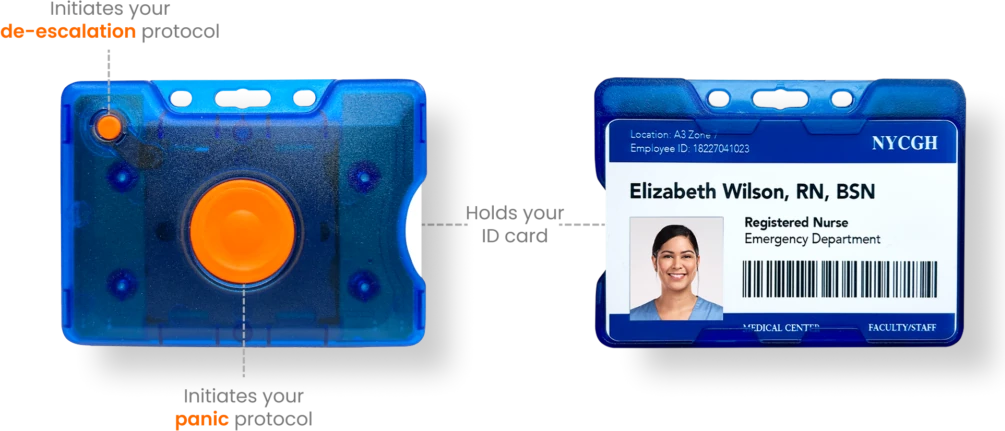
Pinpoint badge holder with a small de-escalation button and a large panic button Initiates your de-escalation protocol Initiates your panic protocol
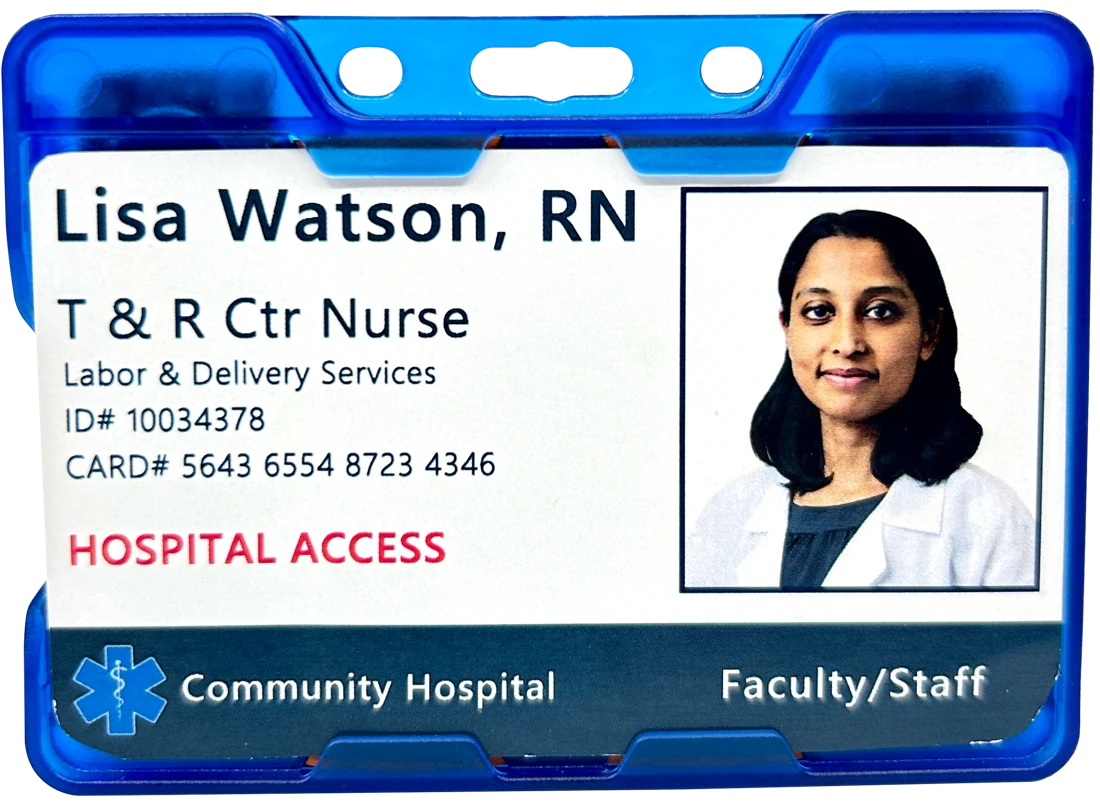
The same badge holder carrying a staff ID cardHolds your ID card
Two alert levels. One badge.

Ask for help before it becomes an emergency

For when a situation begins to escalate but is not yet an emergency: agitation, pacing, raised voices or verbal aggression. A discreet request brings support early, without alarming the patient.

  • Early warning signs
  • Quiet request for backup
  • Supports de-escalation protocols

For an immediate threat that needs an urgent response: physical assault, a weapon, or when staff cannot disengage. Responders get the exact room in milliseconds.

  • Immediate threat or harm
  • Urgent, room-level response
  • Escalates to the full response team
The rising reality

The Rising Reality of Healthcare Workplace Violence

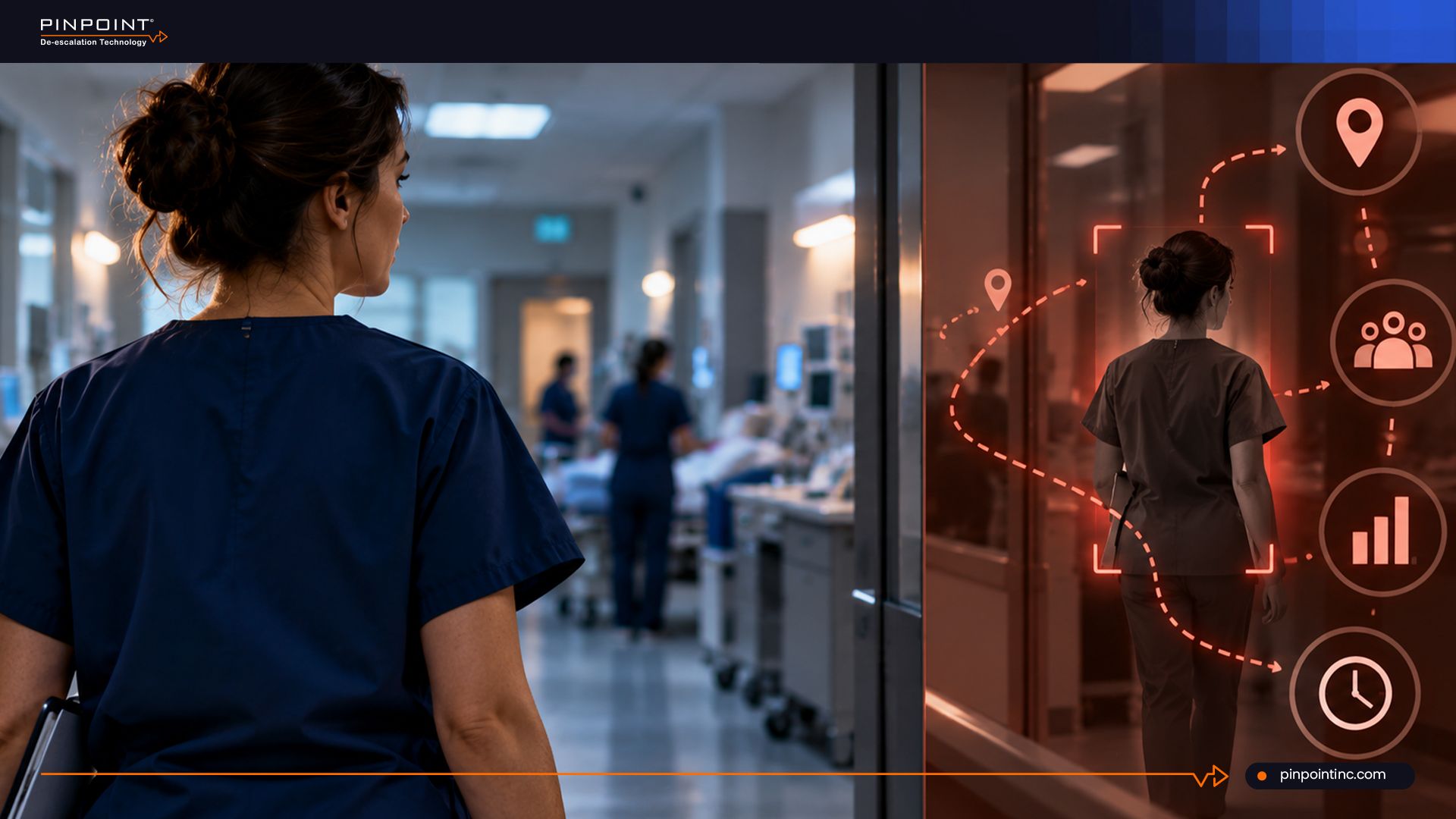
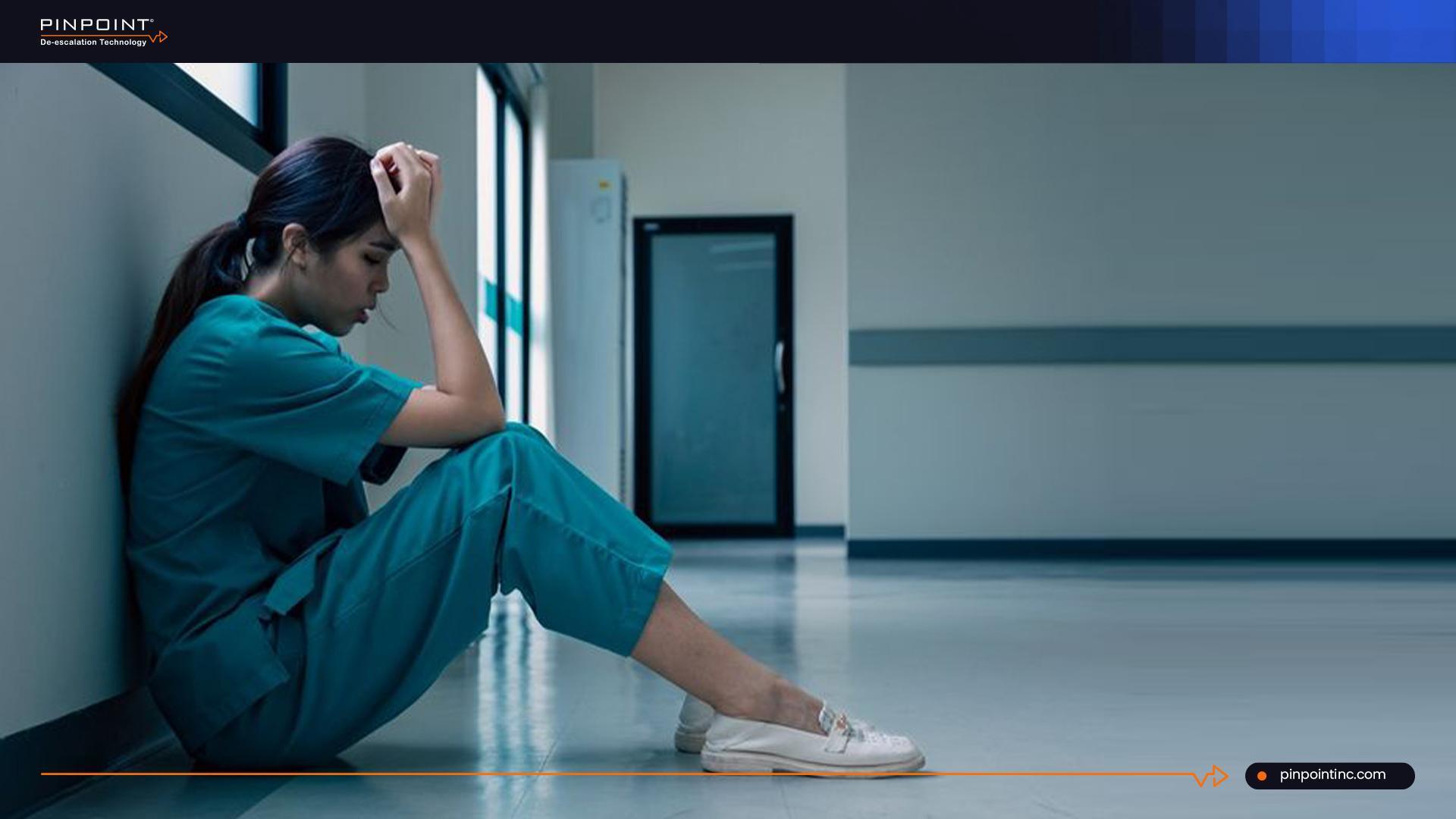
Healthcare workers today are operating under a dark cloud. Ambient Trauma is the silent weight carried by healthcare workers who live in constant fear of being the next victim of workplace violence. This constant state of hyper-vigilance leads to rapid burnout, moral injury, and high turnover.

Pinpoint’s panic alarm restores agency by giving people immediate control in moments of danger, replacing helplessness with action, predictability, and institutional support, key factors in reducing trauma.

~0%

of nurses reported experiencing at least one type of workplace violence in the most recent year.

National Nurses United

~0%

said workplace violence increased on their unit compared to the prior year.

National Nurses United

~0%

reported anxiety, fear, or heightened vigilance because of violent incidents.

National Nurses United

~0%

said workplace violence made them consider leaving the profession.

National Nurses United
De-escalation in motion

One press turns escalation into de-escalation

Every Pinpoint badge is built on one idea: ask for help early, while a situation can still be calmed. Follow the line from rising tension to a settled outcome.

  1. 01Tension builds

    A situation starts to escalate and every second counts.

  2. 02One press

    A single press on the badge sends a de-escalation request early.

  3. 03Calm restored

    Responders are alerted at once, so help arrives while there is still time to settle things.

Why Pinpoint

Not all panic button systems are built alike

Healthcare environments require safety technology that works instantly in high-risk situations. A healthcare panic button system must deliver reliable alerts and rapid response while supporting OSHA and Joint Commission-compliant workplace violence prevention strategies.

Some systems rely on fixed locations, while others use smartphones or real-time location tracking. Each approach offers different advantages depending on the care environment, operational needs, and infrastructure requirements. Pick an alternative to see how it stacks up against Pinpoint, point by point.

  • MobilityCan staff call for help wherever they are?
  • InfrastructureDoes it depend on Wi-Fi, phones or tracking hardware?
  • Response speedHow fast do responders get the exact room?
  • Staff adoptionWill staff actually wear it every shift?
PinpointWearable non-trackingFixed-point buttonSmartphone appRTLS tracking badgeAlternative
LocationExact room, shared only when pressedOnly at installed button pointsGPS, Wi-Fi or cellular, often unreliable indoorsContinuous real-time location
Staff privacyNo continuous trackingNo trackingVaries by appTracks staff 24/7, may raise privacy concerns
NetworkDedicated hardwired system, no Wi-Fi or cellularHardwired within installed zonesDepends on network availabilityIR, BLE, UWB or Wi-Fi technologies
ActivationOne touch on a wearable badgeStaff must reach the buttonCarry, unlock and open the appWearable badge
UpkeepSupervised, no daily maintenance, 5–7 yr batteryMinimal, limited flexibilityBattery, connectivity and device accessComplex infrastructure, ongoing calibration
How it works

Follow one alert from press to response

Staff carry the button like their standard ID badge. Here is what happens in the seconds after someone presses it.

01

Press the badge

Worn like an ID badge on a reel, lanyard, or uniform. One press sends a de-escalation request or a panic alert, without reaching for a phone or a wall button.

02

The room is identified

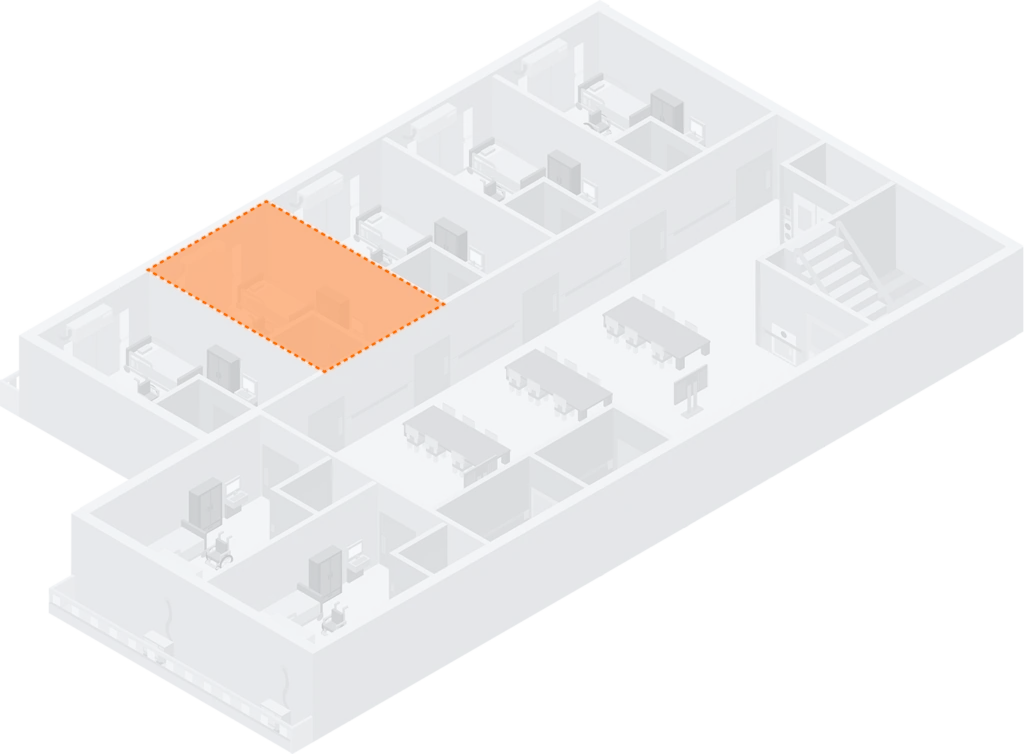
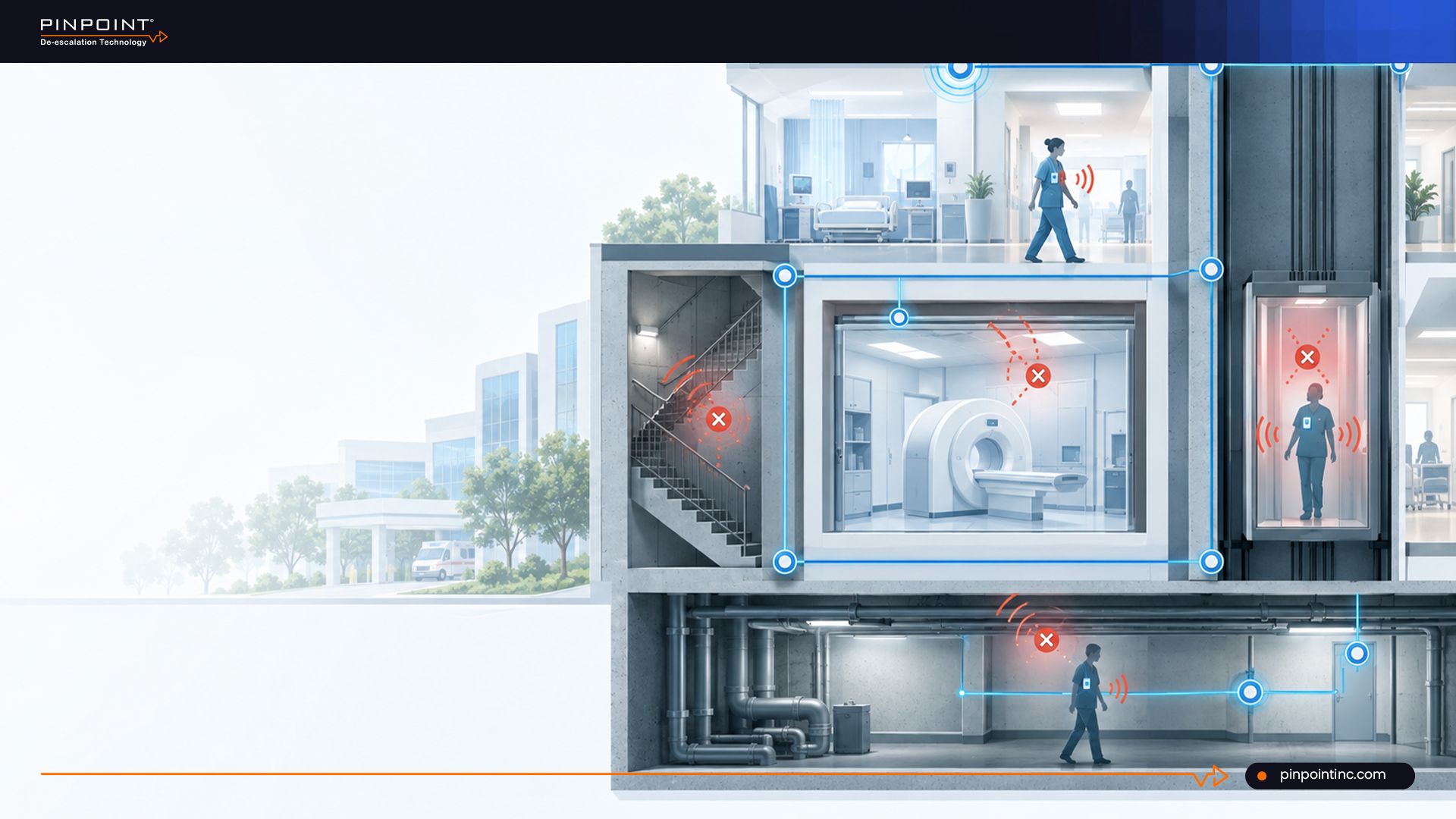
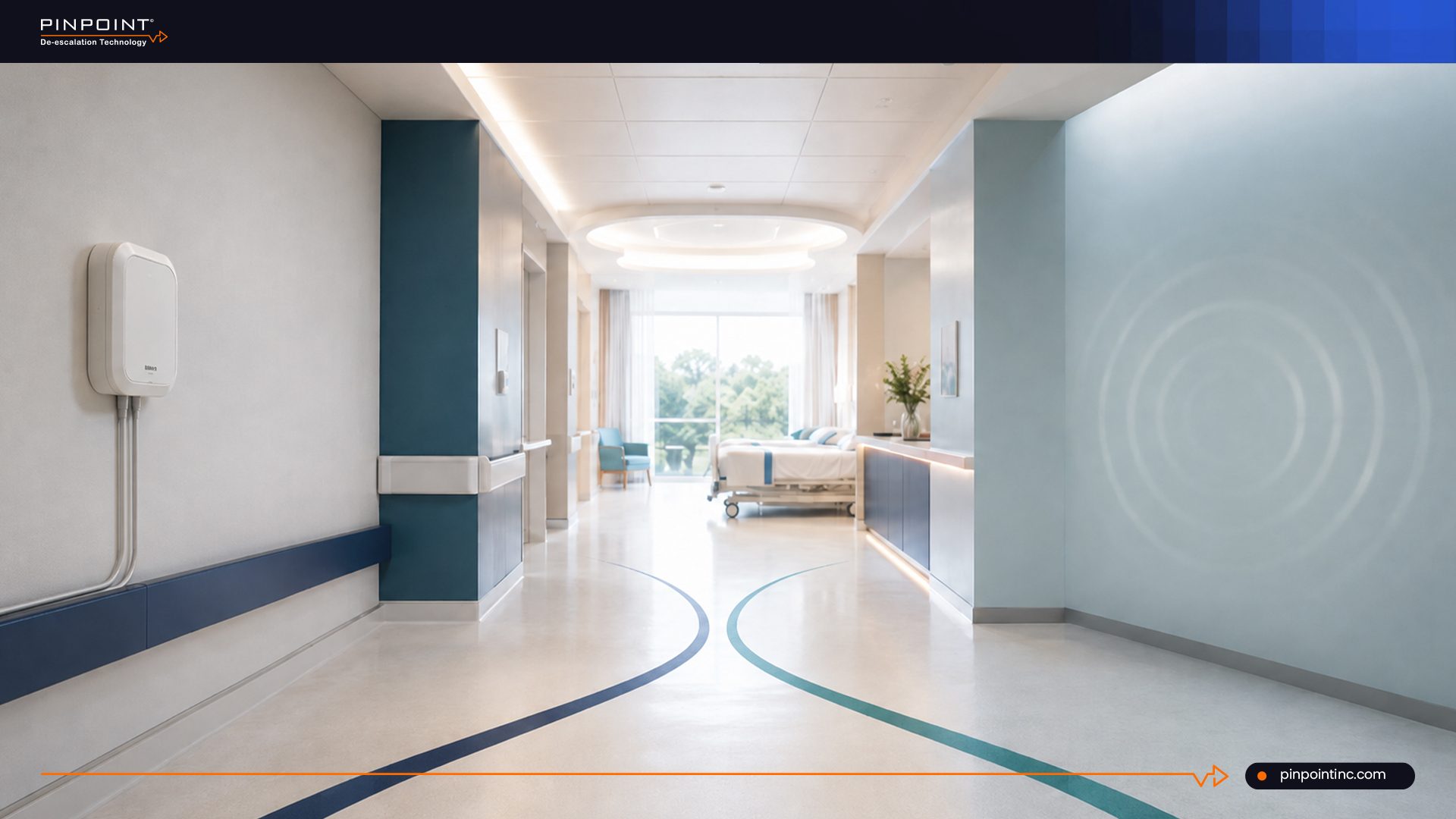
A hardwired infrared receiver in the room picks up the signal and identifies exactly where help is needed. Location is shared only at the moment of the press, never tracked.

03

Every responder is notified

In under 85 milliseconds the alert reaches over-door lights, display panels, sounders, desktops and mobile devices, so the right team knows where to go.

04

Help arrives, and it is logged

Responders head straight to the room. The alert is reset when resolved and recorded with time and location for review.

Pinpoint ID badge holder: the staff ID card slides into the panic button badge
Set it and forget it

“Pinpoint Is a True Set It and Forget It Safety Solution”

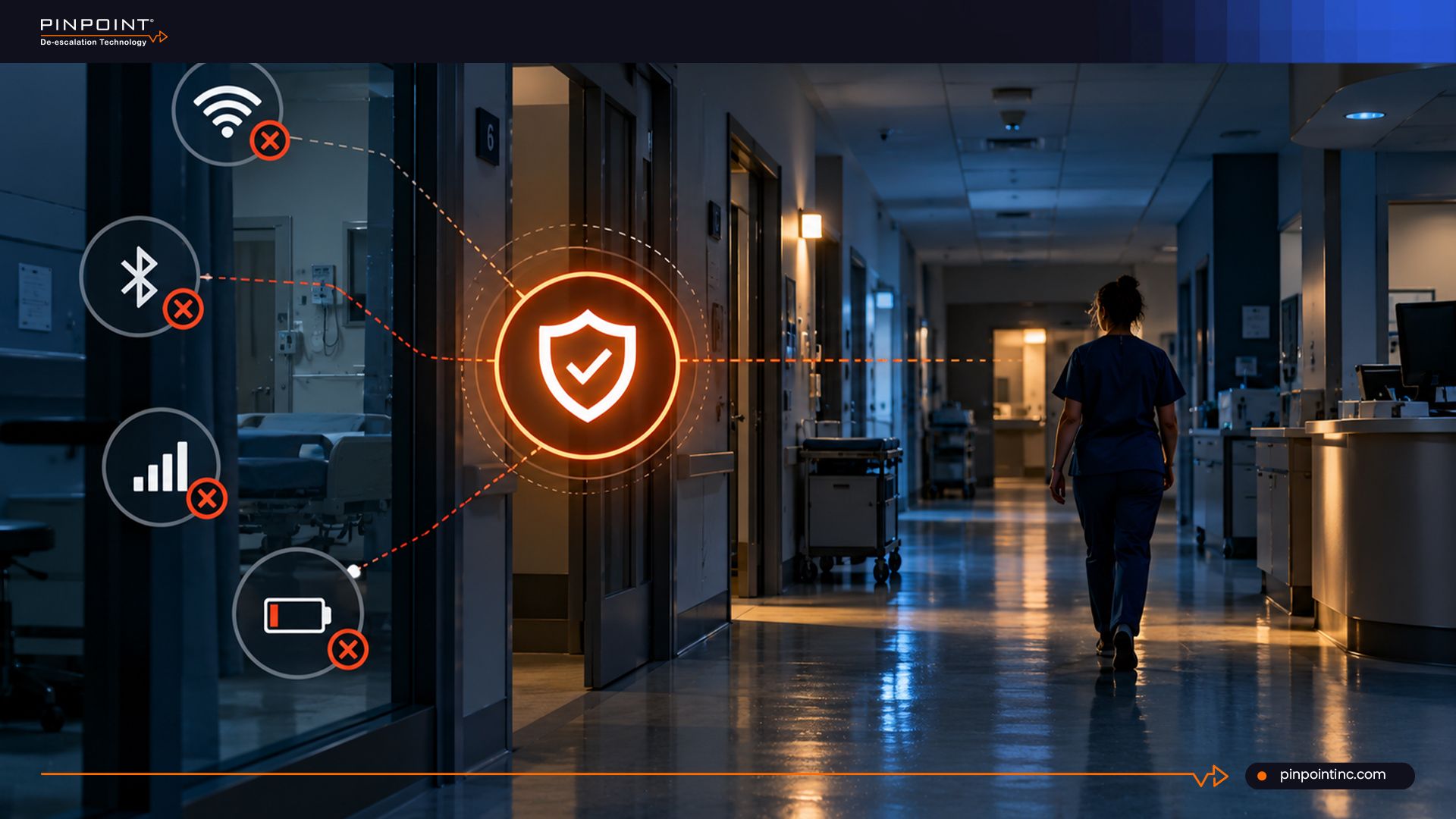
Healthcare IT teams already manage complex systems, and adding tools that require constant maintenance only increases that burden. Pinpoint operates like a commercial fire alarm system that requires no daily upkeep once installed, running reliably in the background with minimal oversight. Because the infrastructure is fully deployed within the facility, hospitals own and control the entire system.

  • Charge devices every dayBadge battery lasts 5–7 years
  • Sync and update appsNo syncing, no app to update
  • Tune Wi-Fi and Bluetooth coverageIndependent of Wi-Fi and Bluetooth
  • Calibrate tracking infrastructureNothing to track, nothing to calibrate
  • Hunt for dead zonesSupervised receivers report their own faults
  • Ride out network outagesHardwired, keeps working when the network does not
6daily upkeep tasks

Pinpoint operates like a commercial fire alarm system: always ready, with no daily maintenance once installed, and the facility owns the entire system.

  • 24/7Hours / week IT supportZero IT Overhead

    Operates like a commercial fire alarm system, always ready with no daily maintenance required.

  • 7yrBattery life5–7 Year Battery Life

    No plugging in, no syncing, no patient disruptions. Designed for reliable continuous operation.

  • 100%Network uptimeHardwired Infrastructure

    No dead zones or connectivity issues. Supervised technology independent of Wi-Fi or Bluetooth networks.

  • <85msAlert deliveryRoom-Level Precision

    Identifies the exact room location across floors and buildings for faster emergency response.

Trusted in care settings

Installed at0healthcare facilities, worldwide

Hospitals, behavioral health systems and residential programs rely on Pinpoint to protect the people who protect patients.

Safeguarding healthcare workers at

The Pinpoint System has worked really well. Unlike the previous system, we’ve never had a single instance when it hasn’t raised the alarm. Absolutely no hiccups! Our staff finally feel perfectly safe.
Rachel BlackburnMillennium Care
Pinpoint is an integral part of our operational capability. With more than 12 years of perpetual use it has proved to be technology of the first order with very low error and fail rate.
Robin McCullochGood Shepherd Centre
I have seen an amazing change in staff perception of safety along with a corresponding decrease in staff injuries and aggressive incidents since using the Pinpoint System.
Linda GlandorfNurse Manager, Mercy Medical Center, Iowa
Resources

Latest from Pinpoint

Healthcare Staff Safety SystemsWhy Nurses Refuse RTLS Hospital Tracking BadgesRead the article Location Technology & SystemsWhy RTLS Signals Fail in Dense Hospital EnvironmentsRead the article Workplace Violence & ComplianceNew York's 2026-2027 Hospital Workplace Violence Requirements: What Changes and WhenRead the article Panic Button Buyers Guides & ComparisonsPinpoint vs. CENTEGIX CrisisAlert: Comparing Wearable Panic Duress BadgesRead the article Care Settings & Facility TypesWhy Freestanding ED Staff Will Wear a Panic Button That Doesn't Track Them, and Won't Wear One That DoesRead the article Care Settings & Facility TypesYour Freestanding ED Doesn't Have an IT Department. Your Panic Button Shouldn't Need One.Read the article How Panic Buttons WorkThe Panic Button Has to Work at 3 A.M. on a Tuesday. Here's Why Only a Supervised System Can Promise That.Read the article Panic Button Buyers Guides & ComparisonsHardwired vs. Wireless Panic Buttons for Hospitals: Which Is Right for You?Read the article Healthcare Worker SafetyDe-escalation Technology for Behavioral Health: How Two-Tier Alert Systems Support Earlier InterventionRead the article Panic Button Buyers Guides & ComparisonsWearable vs. Wall-Mounted Panic Buttons: Which Is Better for Your Facility?Read the article Location Technology & SystemsWhy the Supreme Court’s Shift on Digital Privacy Should Make Hospitals Think Twice Before Tracking NursesRead the article Healthcare Worker SafetyThe Hidden Costs of Constant Surveillance: How Nurse Tracking Can Fuel Nurse BurnoutRead the article

FAQ

Frequently asked questions

Short answers to what facility leaders ask us most. Need more? We are glad to talk it through.

Pinpoint is the only wearable non-tracking panic button built specifically for healthcare. Unlike fixed-point systems that require staff to reach a wall unit, or RTLS-based systems that monitor location 24/7, Pinpoint activates only when a staff member presses for help, delivering room-level accuracy without continuously tracking staff movement. It operates on hardwired infrastructure with no Wi-Fi or Bluetooth dependency, requires zero daily IT maintenance, and runs on a 5–7 year battery.

No. Pinpoint is intentionally designed as a non-tracking system. Staff location is never monitored or recorded during normal operations. Location data is only activated the moment a staff member presses the button to call for help, and it is used solely to guide responders to the correct room.

Pinpoint is deployed across hospitals, behavioral health facilities, residential rehabilitation centers and freestanding emergency departments. Its modular design lets organizations start with a single unit and scale coverage across floors, buildings, or campuses over time.

Pinpoint is designed to be operationally invisible once installed. It functions like a commercial fire alarm system, with no daily maintenance required from IT or facilities teams. There are no devices to charge or sync, and the badge buttons carry a 5–7 year battery life.

Yes. Pinpoint’s wearable staff duress system supports compliance with OSHA’s workplace violence prevention recommendations and aligns with The Joint Commission’s workplace violence standards. The management portal provides auditable incident response records.

Pinpoint’s system is designed to minimize cybersecurity risks by operating independently of Wi-Fi and public networks. Because it uses a dedicated, hardwired infrastructure, it is not exposed to common network-based vulnerabilities.

Yes, as optional add-ons. Pinpoint’s main solution is the wearable panic button. Patient Nurse Call and Patient Safety Check (Q15) build on that system, so the wearable panic button must be installed first. We do not offer them as standalone systems.

Ready when you are

Stop the Burnout. Start the Healing.

When you remove the threat of violence and the anxiety of constant surveillance, the culture of your facility changes. Staff feel valued, protected, and empowered. By choosing Pinpoint, you are investing in more than just a panic button; you are investing in the mental health and longevity of your workforce.

Eliminate the ambient trauma. Replace fear with focus. Join the leading healthcare institutions that have chosen the only wearable non-tracking safety system that respects the privacy of those who give so much to others.

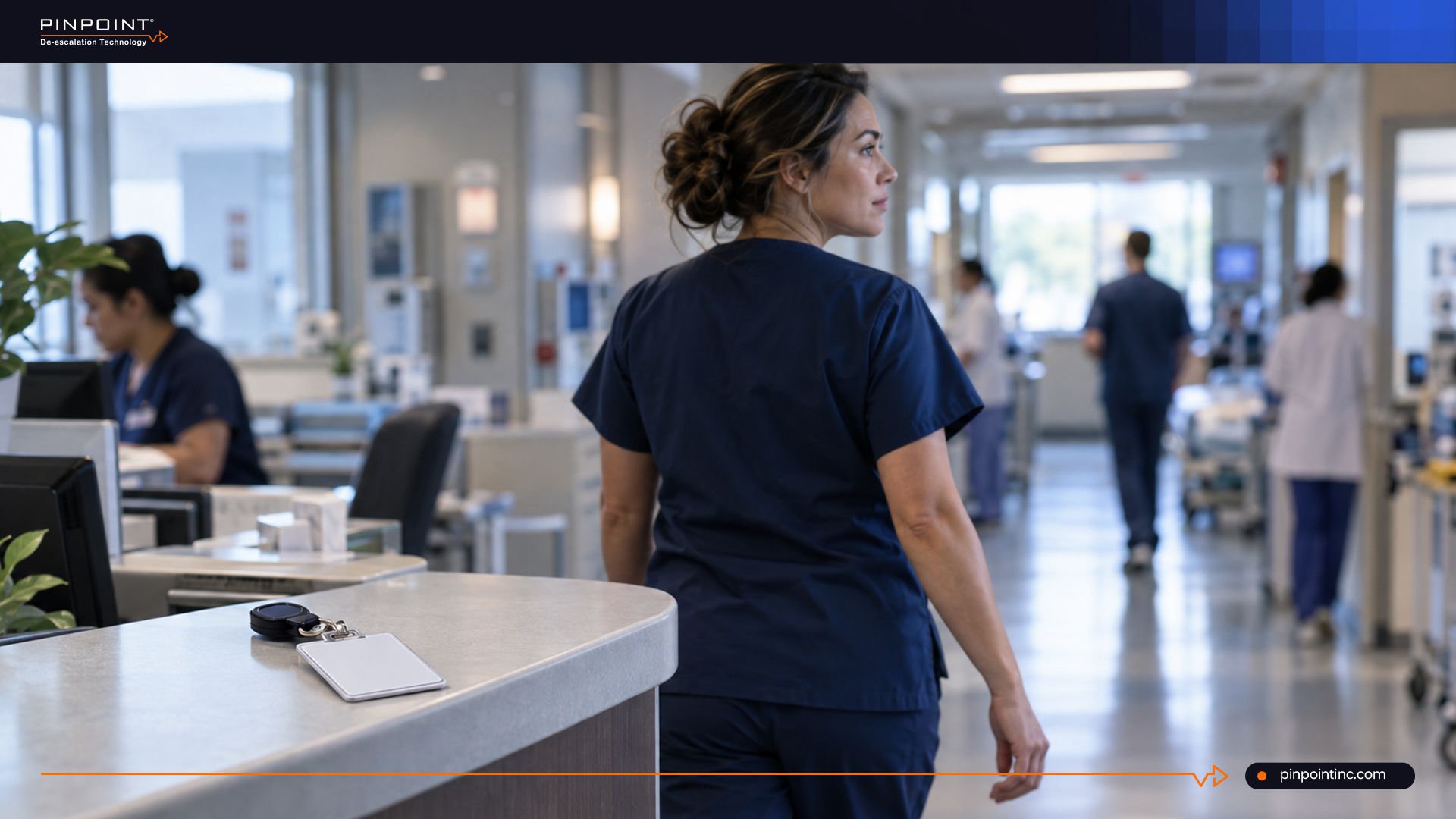
Nurse wearing a Pinpoint badge on a lanyard